Is Pokemon 151 Japanese Worth Buying? A Qatar QAR Price Guide
The Japanese Pokemon 151 set, known by its product code sv2a, has become one of the most talked-about releases among collectors in Qatar. It revives the original 151 Kanto Pokemon in a modern card frame, and it packs several chase cards that keep demand strong long after the initial release. But is it actually worth buying if you live in Doha, Al Rayyan, or anywhere across Qatar, where cards arrive by international shipping and prices are quoted in Qatari Riyal? This guide walks through what makes 151 special, how to read its price ranges instead of chasing a single number, and the practical import, storage, and grading factors that matter specifically for collectors in Qatar. Every price mentioned here is an indicative range, a rough snapshot that moves over time, and should always be re-checked before you buy.
What is Pokemon 151 (Japanese sv2a) and why the hype?
Pokemon 151 is a special expansion built entirely around the first generation of 151 Pokemon, from Bulbasaur to Mew. In Japan it is sold under the code sv2a, and it exists mainly as sealed products rather than a traditional booster box format. The most common ways to buy it are the booster boxes, the enhanced Booster Pack sets, and premium bundles that include promo cards and accessories.
The hype is driven by nostalgia and by design. Collectors who grew up with the original Red and Green games recognise every Pokemon on the checklist, and the set uses modern printing techniques such as textured Special Art Rares that did not exist in the 1990s. That combination of familiar characters and premium finishes makes 151 attractive to both long-term collectors and newer buyers.
Japanese versus English 151
The Japanese sv2a set and the English Scarlet and Violet 151 set share the same theme but differ in card count, print runs, and pull structures. Many collectors in Qatar prefer the Japanese version for its card stock feel, its glossy finish, and the fact that Japanese cards are often seen as cleaner out of the pack. This preference is a matter of taste and market demand, not an official quality ranking.
Complete guide to what is inside 151 (contents and pull structure)
Before you decide between sealed product and singles, it helps to know exactly what a 151 product contains. As a Japanese enhanced expansion pack, sv2a is packaged differently from a standard set, so the pack size and box structure are worth understanding.
151 adds Poké Ball & Master Ball mirror parallels. Bars show relative frequency; exact counts and pull rates vary and are not guaranteed.
Cards per pack and packs per box
The 151 enhanced expansion pack holds more cards than a normal Japanese booster. A single pack contains roughly 7 cards, and a sealed box holds around 20 packs. These figures are the standard configuration for the enhanced pack format, but always confirm the exact count on the product you are buying, since bundles and reprints can vary.
The full rarity ladder
Japanese cards use rarity symbols printed near the card number. Knowing this ladder lets you read any 151 listing at a glance, from bulk commons to top-tier chase cards.
- C (Common): the base rarity, everyday Pokemon and basic cards such as Caterpie, Pidgey, and early-stage Kanto Pokemon.
- U (Uncommon): slightly scarcer cards, often stage-one evolutions, item cards, and trainers.
- R (Rare): standard holo or non-holo rares, including many single-prize Pokemon.
- RR (Double Rare): the Pokemon ex cards in their standard full-body art, such as Charizard ex, Venusaur ex, Blastoise ex, and Mew ex in their RR printing.
- AR (Art Rare): illustration cards with full-art backgrounds of a single Pokemon, such as Pikachu AR, Bulbasaur AR, and other Kanto favourites.
- SR (Super Rare): full-art versions of Pokemon ex and supporters with a textured or foil treatment.
- SAR (Special Art Rare): the premium special illustration cards, the headline chase tier, including Charizard ex SAR and Mew ex SAR.
- UR (Ultra Rare): gold-bordered cards, typically items or a gold ex, sitting at the top of the numbered list.
- Master Ball mirror: a 151-specific parallel where the reverse-holo pattern is a Master Ball design. Rare and highly sought after.
- Poke Ball mirror: the more common 151-specific parallel with a Poke Ball reverse-holo pattern, found more frequently than the Master Ball version.
The chase checklist: headline SAR, AR, and UR cards
These are the cards most collectors in Qatar open 151 hoping to find. Use this as a checklist when comparing sealed value against buying the single you actually want.
- Charizard ex SAR: the top special art rare and the most valuable card in the set.
- Mew ex SAR: a premium special art rare tied to the set's mascot legendary.
- Venusaur ex SAR and Blastoise ex SAR: the other two Kanto starters in special art rare form.
- Pikachu AR: the fan-favourite illustration rare of the franchise mascot.
- Kanto starter and evolution ARs such as Bulbasaur, Charmander, and Squirtle line illustration rares.
- Alakazam ex SR, Zapdos ex SR, and other ex super rares in full-art treatment.
- Gold UR cards such as a gold item card sitting at the end of the numbered list.
- Master Ball mirror versions of popular Pokemon, which command a strong premium over standard mirrors and are among the most collected 151 parallels.
- Poke Ball mirror versions of the same popular Pokemon, valued below the Master Ball mirror but still a step above base cards.
Approximate pull rates
Pull rates for Japanese sets are not officially published as exact odds, so any figures are community estimates only, they vary between print runs, and nothing is guaranteed. Treat the following as rough guidance, not a promise.
- AR illustration cards: the most frequently pulled of the higher rarities, often around one or more per few packs on an approximate basis.
- SR and RR ex cards: less frequent than AR, appearing on average a handful of times across a box, approximate and variable.
- SAR special art rares: the scarcest chase tier, with a top card like Charizard ex SAR being an occasional rather than expected hit, approximate only.
- Master Ball mirror cards: rare parallels that do not appear in every box, with no guaranteed count.
- UR gold cards: top-of-list rarities that are infrequent and not guaranteed per box.
The chase cards that drive 151 value
Most of the value in any 151 product concentrates in a handful of standout cards. Understanding these helps you judge whether a sealed product or a single is fairly priced.
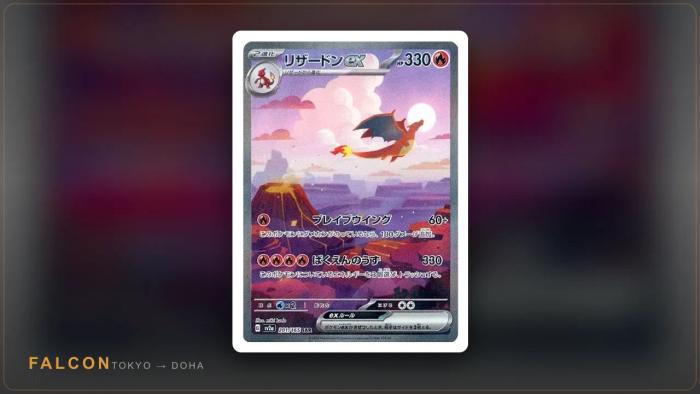
- Charizard ex Special Art Rare (SAR): the headline chase card, showing Charizard in a full-art illustration. It typically commands the highest single-card prices in the set.
- Master Ball mirror cards: reverse holo cards stamped with a Master Ball pattern instead of the standard mirror. These are rarer than the Poke Ball mirror versions and carry a strong premium.
- Pikachu Art Rare (AR): a fan-favourite illustration card that stays in demand because Pikachu is the franchise mascot.
- Other Special Art Rares such as Mew ex and Venusaur ex, which round out the high-end chase list.
- Full-art and illustration rares of popular Kanto Pokemon, which sit in the mid-tier but still hold meaningful value.
Indicative QAR price ranges for Qatar buyers
Prices for 151 move with supply, reprints, and collector demand, so no single figure stays accurate for long. The ranges below are rough, approximate snapshots meant to help you set expectations, not fixed quotes. Always confirm the current price before you commit, because the market can shift within weeks.
- Sealed Japanese booster box: an indicative range that has historically sat in the higher tens to low hundreds of QAR territory depending on availability. Approximate only, and to be re-checked at purchase.
- Enhanced Booster Pack (single pack): a small QAR figure per pack, but with a wide spread depending on seller and whether it is loose or from a fresh box. Approximate and variable.
- Charizard ex SAR single: the highest-value single, often several hundred QAR in raw condition and considerably more when graded high. Indicative, condition-dependent, and subject to change.
- Master Ball mirror singles: a premium over standard versions, with popular Pokemon commanding the strongest prices. Snapshot only.
- Common and uncommon singles: usually low single-digit to low double-digit QAR, useful for set completion rather than investment.
Import, customs, and shipping to Qatar
Because most Japanese 151 products ship from Japan, the landed cost in Qatar is more than the sticker price. Factoring in shipping and any import handling is essential to judging whether a deal is really worth it.
Shipping time and method
Delivery from Japan to Qatar generally runs from several days to a couple of weeks depending on the courier and clearance. Express methods are faster but cost more, while economy methods save money at the expense of speed. Sealed boxes are heavier, so shipping cost scales with weight and dimensions.
Customs and duties
Imported goods into Qatar can be subject to customs assessment. The exact treatment depends on declared value and current regulations, so build a buffer into your budget and check the latest rules rather than assuming a fixed rate. A reputable seller should provide a clear declaration and tracking.
Protecting your cards in Qatar's climate
Qatar's heat and humidity are a real consideration for anyone holding valuable cards. Cardboard and holographic foil react to moisture and temperature swings, so storage is part of protecting your investment.
- Keep cards indoors in a climate-controlled room, away from windows and direct sunlight that can fade ink and warp cardboard.
- Use penny sleeves plus toploaders or a rigid case for singles, and consider a sealed storage box with desiccant packs to manage humidity.
- Avoid storing cards in cars, garages, or any space that gets hot, as heat can cause curling and clouding of holo surfaces.
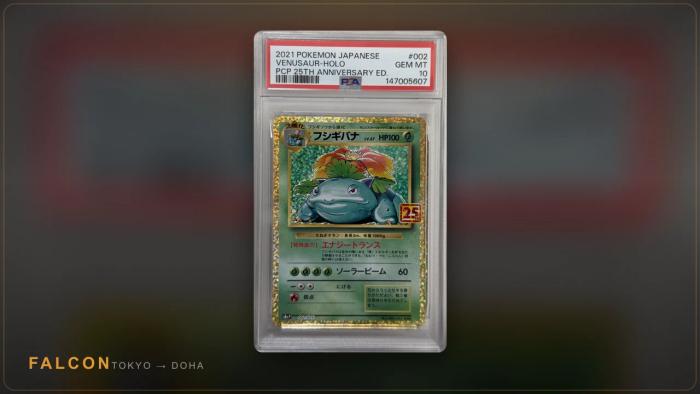
- For high-value chase cards, a graded slab offers both protection and a tamper-evident case that helps in resale.
Grading, PSA 10, and the Japanese advantage
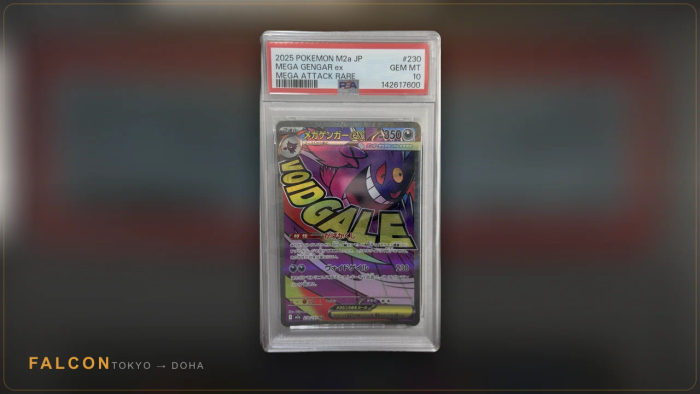
Grading is where Japanese 151 cards often shine. Because Japanese print quality tends to be consistent and cards frequently arrive with clean edges and centring, they have a reputation for grading well. A PSA 10, the top gem mint grade, can multiply the value of a chase card compared with its raw price.
That said, grading is never guaranteed. Surface scratches, whitening, or off-centre printing can drop a card to a lower grade, and grading fees plus shipping to a grader add cost and time. For collectors in Qatar, sending cards abroad for grading also means factoring in transit risk and turnaround, which can run into months.
So, is Pokemon 151 Japanese worth buying?
Whether 151 is worth buying depends on why you are buying. The set has genuine strengths: strong nostalgia, iconic chase cards, premium print quality, and steady collector interest. But it is not a guaranteed return, and prices can fall as much as they rise.
A simple decision framework
- If you collect for enjoyment and want a nostalgic Kanto set, 151 is one of the most satisfying modern releases to open and display.
- If you want specific chase cards, buying the single you want is often more cost-effective than opening sealed product and hoping for the pull.
- If you are buying purely as a bet on value, treat it like any speculative purchase: research current ranges, buy from trusted sellers, and never spend more than you are comfortable losing.
- If you are new to the hobby in Qatar, start small, learn how to verify authenticity and condition, and build up before committing to expensive sealed boxes.
How to buy safely in Qatar
Wherever you buy, a few habits protect you from overpaying or receiving damaged and inauthentic cards.
- Check that the seller shows clear photos, accurate condition notes, and transparent pricing in QAR or an easily converted currency.
- Confirm shipping method, estimated delivery days to Qatar, and how the item is packaged against heat and moisture.
- Compare the landed cost, including shipping and any import handling, before deciding a price is good.
- For high-value singles, prefer graded cards or sellers who guarantee authenticity and returns.
- Re-check the current market range on the day you buy, since 151 prices move with new set news and supply changes.
Frequently asked questions
Is Japanese 151 better than the English version?
Neither is officially better. Many collectors prefer the Japanese sv2a set for its card stock, glossy finish, and reputation for grading well, while others prefer English for language readability. It comes down to personal taste and local demand, so choose the version you enjoy and can source reliably in Qatar.
How much does Pokemon 151 cost in QAR?
There is no fixed price. Sealed boxes, single packs, and chase singles all sit in different ranges that shift with supply and demand. Any QAR figure you see, including in this guide, is an approximate snapshot that should be re-checked at the time of purchase, along with shipping and import costs to Qatar.
Which 151 card is the most valuable?
The Charizard ex Special Art Rare is usually the top single, followed by rare Master Ball mirror cards of popular Pokemon and the Pikachu Art Rare. Value is concentrated in these few cards, so most cards in a box will be common or uncommon rather than high-value hits.
Will my cards get damaged in Qatar's heat and humidity?
They can if stored poorly. Heat and humidity cause warping, clouding, and edge damage that is often permanent and lowers value. Keep cards in a climate-controlled room, use sleeves and toploaders or graded slabs, and add desiccant packs to sealed storage to reduce risk.
Should I open sealed product or buy singles?
If you enjoy the surprise of opening packs and are comfortable with uncertain value, sealed product is fun. If you want a specific card such as the Charizard ex SAR, buying the single is usually more cost-effective than chasing it through sealed product. Match the choice to your goal.
Is grading worth it for 151 cards?
Grading makes sense for high-value chase cards where a top grade like PSA 10 significantly raises value. Japanese cards often grade well due to consistent print quality, but grades are never guaranteed, and fees plus international shipping and turnaround time from Qatar add cost. Grading common cards is rarely worthwhile.
How long does shipping from Japan to Qatar take?
It generally ranges from a few days to a couple of weeks depending on the courier and customs clearance. Express is faster and pricier, while economy is cheaper and slower. Always confirm the estimated delivery window and packaging with the seller before ordering, and factor shipping into your total cost.