Where to Buy Pokemon Cards in Doha: A Channel by Channel Guide (2026)
If you live in Doha and you want to buy Pokemon cards, the first question is not which card to buy but where to buy it at all. Qatar does not yet have the dense network of dedicated trading card shops that you find in Tokyo, London, or Los Angeles, so the honest answer is that your options fall into a small number of channels, each with real strengths and real limits. This guide walks through every one of those channels in plain language: the physical toy stores and mall counters, the general online marketplaces, and the specialist importers who focus on Japanese cards. Our goal is not to talk you into a single answer but to help you match the channel to what you actually want, whether that is a cheap booster for a child, a competitive deck staple, or a specific Japanese single you have been chasing for months. One thing we state clearly from the start: FALCON is an independent reseller and is not affiliated with, endorsed by, or partnered with Pokemon, The Pokemon Company, Nintendo, or Creatures. Every channel we describe, including our own, is presented so you can compare them with open eyes.
How to think about where to buy in Doha
Before we list channels, it helps to accept one honest fact about the local market. Doha is a fast growing city with a young, connected population and a strong appetite for hobbies, but the trading card scene here is still maturing. That means the buying experience is different from a city with a card shop on every corner. You will not usually walk in off the street and find a deep, sorted binder of Japanese singles waiting for you. Instead you will be choosing between a general toy or hobby retailer, a broad online marketplace, or a seller who specialises in importing. Understanding that landscape up front saves a lot of frustration later.
The second thing to accept is that no single channel is best for everything. A mall toy store is wonderful for grabbing a sealed booster on a Friday afternoon with your family, but it is the wrong place to hunt for a specific Japanese promo from a set that never officially came to this region. A general marketplace can surprise you with a listing you did not expect, but it can also expose you to counterfeits and to sellers with no accountability. A specialist importer can reach cards that simply are not on local shelves, but it asks you to wait for international shipping. The skill is not finding the one perfect channel, it is knowing which channel to reach for on any given day.
Throughout this guide we will keep returning to five practical questions, because they are the ones that actually decide where you should buy. What is in stock and how fresh is that stock information. How confident can you be that the card is genuine. How fast can it reach your door in Qatar. What price should you expect and how much does it vary. And finally, who is accountable if something goes wrong. Keep those five questions in your head as you read, and by the end you will be able to score any seller you meet, including us, against the same fair checklist.
It also helps to know a little about the wider context of buying into Qatar, because it shapes every remote channel. Anything that ships from abroad may pass through customs, can attract duties or handling fees depending on declared value and category, and travels through a hot, humid climate before it reaches your door. None of this should frighten you, but it does mean that the cheapest sticker price is not always the true landed cost, and that packaging quality matters more here than in a temperate country. A thoughtful seller anticipates all of this, prices transparently, and protects the card for the journey. As you weigh channels, keep the whole path in mind, from the listing you click to the moment the card is safely in your hands in Doha, rather than judging only the number on the screen.
The three ways to buy Pokemon cards in Doha
At the highest level, almost every way to buy Pokemon cards in Doha falls into one of three families. Once you can see these three families clearly, the whole market stops feeling confusing and starts feeling like a simple set of trade offs. We will introduce them here and then give each one its own detailed section, because the details are where the real decisions live.
One, physical shops and mall counters
The first family is the physical retail you can visit in person, which in Doha mostly means toy sections inside large stores, hobby and gaming counters inside shopping malls, and the occasional bookshop or electronics retailer that stocks sealed trading card products. The great strength here is immediacy. You see the product, you pay, you carry it home the same hour, and there is a physical place you can return to. The limit is range. These retailers usually stock mainstream sealed English language product and rarely carry a broad or deep selection of singles, especially Japanese singles.
Two, general online marketplaces
The second family is the broad online marketplace, the kind of platform where thousands of independent sellers list everything from phone cases to trading cards. These can be regional platforms serving the Gulf or global ones that ship into Qatar. Their strength is breadth and the occasional lucky find. Their weakness is that the platform is not a card specialist, so authenticity checks, grading knowledge, and accurate condition descriptions vary wildly from one seller to the next. You are really buying from an individual stranger, with the platform sitting in the middle.
Three, specialist importers
The third family is the specialist importer, a seller whose entire business is sourcing cards, often directly from Japan, and delivering them to customers in a specific region such as Qatar. FALCON sits in this family. The strength of a specialist is reach and accountability: they can obtain cards that never touched a local shelf, they know how to authenticate and describe them properly, and they stake their reputation on getting it right. The trade off is that the card travels internationally, so you plan for shipping time rather than walking out with it the same day.
Physical shops and mall counters in Doha
Let us start with the option most people think of first: walking into a shop. In Doha, the realistic places to find Pokemon cards in person are the toy aisles of large department style stores, the hobby and games counters that appear inside major shopping malls, and a scattering of bookshops, stationery stores, and electronics retailers that keep a rack of sealed trading card products near the checkout. We are describing categories here rather than naming specific stores, because stock and even the stores themselves change over time and we will not invent details we cannot stand behind.
The genuine joy of buying in person is that it is fast, social, and low commitment. If your child wants a booster pack as a treat, or you simply enjoy the ritual of opening something sealed, a mall counter is perfect. You can inspect the packaging with your own eyes, you pay a clear price, and if a sealed product is faulty you have a physical place to take it back. For casual buying, sealed English language product, and gifts, this channel is often the easiest and most pleasant choice in the whole city.
The limits appear the moment your needs become specific. Physical retailers in Doha overwhelmingly stock sealed product rather than singles, so if you want one exact card rather than the gamble of a pack, you are usually out of luck. When they do carry singles, the selection is thin and rarely sorted for collectors. The product is also almost always the English language print, which matters a great deal if you specifically want Japanese cards, as we will explain in its own section. And because these are general retailers rather than card specialists, the staff cannot usually help you authenticate a single, grade a card, or advise on a competitive deck.
Price is another quiet consideration. A general retailer buys sealed product through mainstream distribution and prices it for convenience, which can be very fair for current mainstream sets and less competitive for anything scarce or older. Because their turnover of trading cards is a small part of a broad business, you may also find that a set has sold through and is simply not restocked for a long time. None of this makes physical shops bad. It makes them excellent for one job, casual sealed buying, and weak for another, targeted single hunting.
One more honest point about physical retail is that its rhythm is set by mainstream distribution rather than by collector demand. A set arrives, sells through, and may not return for a long time, because trading cards are a small line inside a broad business and restocking follows the retailer wider schedule. That rhythm is fine for casual buying but frustrating if you are chasing something specific, since you cannot simply request a card the store never planned to carry. The local hobby community, informal meetups, and trading among friends often fill part of this gap, and they are worth exploring for the social side of the hobby. But community trading carries its own authenticity questions between individuals, so the same caution about seeing the exact card applies there just as much as it does online.
General online marketplaces: breadth with real caveats
The second channel is the broad online marketplace. These platforms host many independent sellers and list an enormous variety of goods, and within that ocean you will find people selling Pokemon cards, both sealed and single. Some of these platforms are regional and serve the Gulf directly, while others are global marketplaces that will ship an order into Qatar. For a buyer in Doha, the appeal is obvious: you can search from your sofa, you sometimes stumble on a listing you never expected, and prices are set by competition between many sellers.
It is worth being honest that this breadth is real and sometimes genuinely useful. If you are after a common card and simply want the cheapest copy that will arrive in Qatar, a general marketplace can be efficient. The variety can also be educational, letting you see the going rate for many cards side by side. We do not want to scare anyone away from a tool that, used carefully, has a legitimate place in a buyer toolkit.
The caveats, however, are serious and you should hold them firmly in mind. The single biggest one is that a general marketplace is not a card specialist. The platform makes its money from transactions across every category, so it has little expertise in trading cards specifically. That means the burden of judging authenticity, condition, and fair price falls almost entirely on you, the buyer. A photo can be borrowed from another listing, a condition claim like near mint can be optimistic or simply wrong, and a counterfeit can sit in a listing that looks perfectly ordinary. The Pokemon market has a long history of fakes, and general platforms are exactly where inexperienced buyers meet them.
Accountability is the second caveat. When you buy from an individual seller on a marketplace, your protection depends on that platform dispute process and on the seller willingness to cooperate. Some platforms handle disputes well, others slowly, and cross border returns of a low value card are often not worth the effort even when you are in the right. If the card arrives damaged, mis described, or fake, you may find that getting your money back costs more time and stress than the card was worth. This is very different from dealing with a specialist who stakes an ongoing reputation on every order.
The third caveat is data freshness and trust in the listing itself. A marketplace listing may sit online long after the item sold, or a single seller may relist a stock photo for a card they no longer hold. There is often no reliable way to know how recently the listing was checked. If you do use these platforms, treat every listing as a claim to be verified rather than a fact, ask for extra photos of the exact card, favour sellers with a long and specific track record in trading cards, and never let the promise of a bargain switch off your caution.
There is also a practical layer around payment and cross border logistics that is easy to overlook on a general marketplace. When an order ships internationally into Qatar, the final amount you pay can include shipping, possible customs handling, and currency conversion on top of the listed price, and an individual seller may not spell any of this out clearly. A card that looked cheap in the listing can become ordinary once every cost is counted, and a slow international parcel from an unspecialised seller may arrive with little protection against the journey. This does not make marketplaces useless, but it does mean you should mentally add the full landed cost and the shipping risk to any listing before deciding it is a bargain, and prefer sellers who are transparent about exactly how the item will travel to you.
Why Japanese cards need a specialist importer
Here we reach the heart of why a channel like FALCON exists at all. Everything above works reasonably well if you want mainstream English language sealed product. The picture changes completely the moment you specifically want Japanese cards, and a large and growing share of collectors in Qatar do, because Japanese prints are where much of the excitement, the artwork, and the earliest releases live. Japanese cards are not simply English cards in another language. They are a distinct product line, released first in Japan, often in sets and promos that never receive an official regional release near the Gulf at all.
That single fact reshapes the whole buying problem. If a card was printed for the Japanese market and never distributed here, then no amount of visiting Doha malls will find it, because it was never sent to those shelves. A general marketplace might occasionally surface a copy, but now all the authenticity risks we described are magnified, because you are less likely to know what a genuine version of that specific Japanese card should look like. This is exactly the gap a specialist importer fills: they source directly from where the card actually exists, which for Japanese product means Japan itself.
A specialist importer brings three things the other channels struggle to offer for Japanese cards. First, reach: because they buy in the Japanese market, they can obtain sets, singles, and promos that simply are not present in local retail. Second, literacy: a specialist who handles Japanese cards every day learns the fine details of genuine print quality, set symbols, rarity marks, and packaging, which is precisely the knowledge a general retailer or marketplace seller usually lacks. Third, accountability: a specialist depends on repeat business from a specific community, so mis describing or selling a fake card is not a one off risk for them, it is business suicide.
There is also a subtler benefit around trust in condition and grading. Japanese cards are often prized for very high grades, and the differences between a good copy and a great one can be tiny and hard to judge from a casual photo. A specialist who works with these cards constantly can describe condition accurately, photograph the exact card you will receive, and where relevant cross check a grading certificate. That combination of reach into Japan and genuine literacy about the product is the core reason serious Japanese card buyers in Qatar gravitate to specialist importers rather than hoping a general channel happens to have what they want.
English print versus Japanese print: what is actually on local shelves
A lot of confusion in Doha comes from not realising that English and Japanese Pokemon cards are two parallel worlds. The Pokemon Company releases cards in Japanese first, in the Japanese market, and later releases English language versions for international markets, and the two lines do not map onto each other one for one. Set names differ, some cards appear in one line and not the other, artwork and rarity treatments can vary, and release timing can be months apart. When you buy in Doha, the language of the print you end up with is not a small detail, it changes what you are actually holding.
On the ground in Qatar, the practical reality is that physical shops and most convenience oriented sellers carry English language sealed product, because that is what mainstream international distribution supplies. If your happiness depends on opening packs of the current English set with your friends, that availability is good news and the local channels serve you well. The gap opens for buyers who specifically want the Japanese line, whether for the earlier release, the artwork, the collecting tradition, or simply because a particular card only exists as a Japanese print.
It is worth being clear that neither line is better in some absolute sense. English cards are tournament legal in English speaking play environments, are easier to read for many players here, and are what most local sellers stock. Japanese cards are prized by many collectors for print quality and for being the origin of the hobby, and some of the most sought after modern cards are Japanese exclusives. The point is not to rank them but to know which one you want before you choose a channel, because that single choice largely decides whether a local shelf can help you or whether you need an importer.
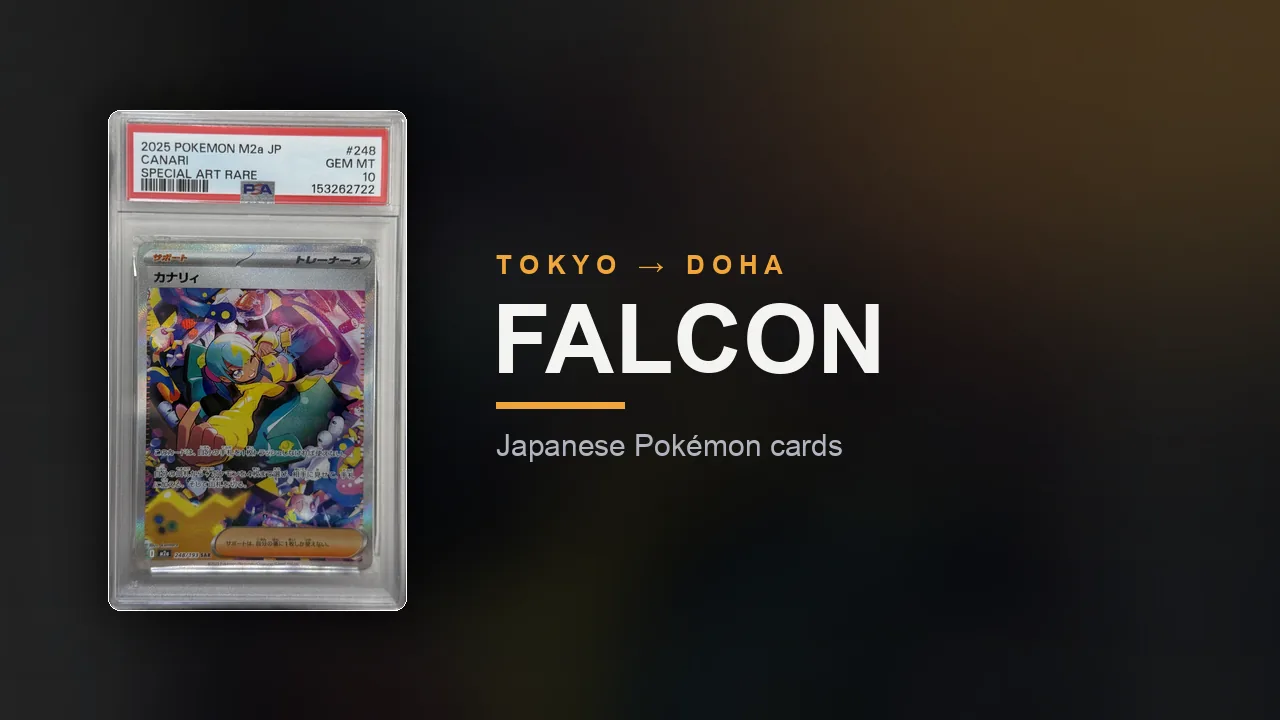
A common trap is assuming a marketplace listing labelled simply Pokemon card will be the version you expect. Sellers do not always specify the language clearly, and photos can be ambiguous. If the language matters to you, and for Japanese collectors it matters enormously, you must confirm it explicitly before buying, ideally by seeing a clear photo of the exact card front and back. Specialist importers who deal in Japanese product remove this uncertainty by definition, which is another quiet reason serious Japanese buyers prefer them over guessing on a general channel.
How to judge authenticity, channel by channel
Counterfeit Pokemon cards are a real and persistent problem, and the risk you face depends heavily on which channel you buy through. Rather than giving you a single anti fake checklist, it is more useful to understand how the authenticity question changes across the three families, because the right defence is different in each. The general principle is simple: the more accountable and specialised the seller, the less of the authentication burden lands on you.
Physical shops
For sealed English product from a reputable physical retailer, authenticity risk is generally low, because these stores buy through mainstream distribution and a fake sealed box is comparatively rare in that supply chain. The main thing to check is that packaging is intact and factory sealed, with no signs of resealing. Where physical shops become risky is loose singles of unknown origin, which occasionally appear and which a general retailer is not equipped to authenticate. Treat any single from a non specialist with the same caution you would online.
General marketplaces
This is where authenticity risk is highest, because you are effectively buying from an individual stranger and the platform does not vet cards. Here the burden is entirely yours. Demand clear photos of the exact card, front and back, in good light. Learn the specific tells for the cards you collect, such as texture, print dot patterns, font weight, colour of the card edge core, and the feel and behaviour of a genuine card in a light test. Favour sellers with long, trading card specific histories, be sceptical of prices that are too good, and treat a refusal to send extra photos as a red flag rather than an inconvenience.
Specialist importers
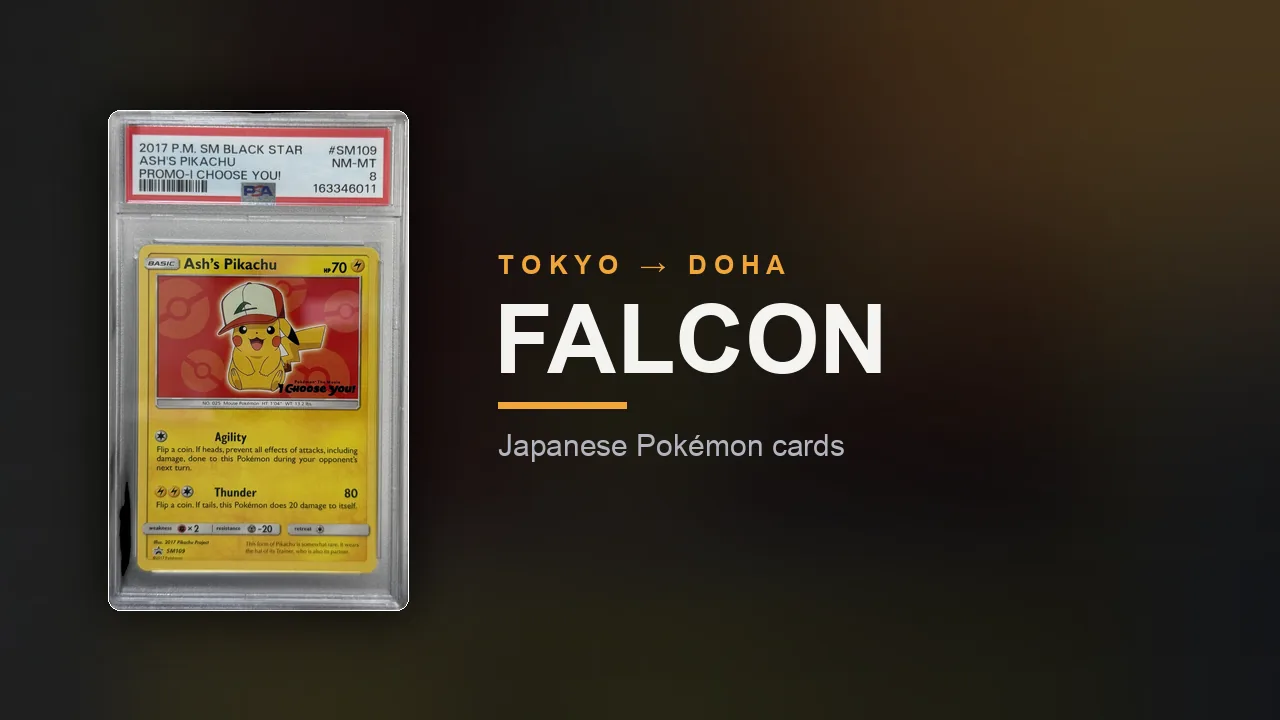
A specialist reduces your authentication burden the most, because verifying genuineness is part of their core competence and their reputation depends on it. A good importer photographs the actual card you will receive rather than a stock image, describes condition honestly, and where a card is graded, lets you cross check the certificate number against the grading company database so the slab and the card match the record. You should still ask questions and expect clear answers, but the difference is that the seller is on your side of the authenticity problem rather than leaving you alone with it.
Delivery and timing options for Doha
How fast a card reaches you is a genuine part of choosing a channel, and it splits cleanly along the physical versus remote line. If you buy in person at a mall, delivery is instant by definition: you carry the product home the same hour. That immediacy is the single biggest advantage of physical retail, and for a last minute gift or an impulse pack it is hard to beat. No channel that ships can compete with simply walking out of the store holding the thing.
Local online sellers and regional marketplaces occupy the middle ground. Because the item is already inside Qatar or the immediate region, domestic courier networks in Doha can be quick, and some sellers advertise fast or even same day local delivery within the city for items they hold in hand. The important qualifier is that this speed only applies when the item genuinely is local stock. A listing that looks local but actually ships from abroad will behave like an international order no matter how the delivery is labelled, so it is always worth confirming where the item physically is before you rely on a delivery promise.
Specialist importers deal in international shipping by nature, because the card is being brought from its source, often Japan, to Qatar. This means you plan for transit time rather than instant gratification. A reputable importer is transparent about expected timelines, uses tracked and protected shipping appropriate to the value of the card, and packages cards to survive the journey and the Gulf climate. The right way to think about it is a trade: you accept a wait in exchange for reach into cards that no local shelf can offer, and for the accountability of a seller who specialises in exactly what you are buying.
It is worth saying a little more about protection, because in the Gulf the journey itself is a real test. Heat and humidity are hard on paper and foil, and a card that was perfectly fine when it left can suffer if it is poorly packed or left sitting in a hot vehicle. A serious seller uses rigid protection, moisture aware packaging, and a sensible outer box rather than a thin envelope, especially for anything valuable. When you compare delivery options, do not only compare speed; compare how the card is protected in transit, because a card that arrives fast but bent or curled is not a good outcome. This is another area where a specialist who ships these cards constantly tends to have better habits than an occasional seller mailing a card for the first time.

What to expect on price, and why it varies so much
Price is where new buyers get the biggest surprises, so it deserves an honest and careful section. The first thing to internalise is that there is rarely one correct price for a Pokemon card. Instead there is a range, and where a specific copy sits in that range depends on condition, print, language, rarity, how recently it was released, and plain supply and demand on the day. Anyone who quotes you a single exact number as if it were a fact is oversimplifying a genuinely variable market.
To make this concrete without inventing false precision, think in broad bands rather than exact figures. A current mainstream sealed booster pack is an inexpensive, pocket money purchase. A sealed booster box of a current set is a mid sized purchase, the kind of thing you plan for rather than grab on impulse. Common singles can be very cheap, sometimes costing more in shipping than in card value. Sought after singles, chase cards, and older or graded Japanese cards climb steeply from there and can reach serious sums for the rarest, highest grade examples. These bands are directional only, they move over time, and any snapshot should be treated as a snapshot rather than a promise.
Why does the same card cost different amounts across channels? Several honest reasons. Physical retailers price sealed product for convenience through mainstream distribution, which is fair for current sets but uncompetitive for anything scarce. Marketplace prices swing with individual sellers, some hopeful and some desperate, so you see both bargains and fantasies in the same search. Specialist importers price to reflect the real cost of sourcing from Japan, authenticating, protecting, and shipping a card across the world, plus the value of accountability. A higher specialist price is not automatically worse value once you count the reach and the reduced risk of a fake or a mis described card.
The practical takeaway is to always compare like with like and to treat any price you see as a data point with a timestamp, not an eternal truth. The same card in near mint English condition is not comparable to a lightly played Japanese copy, and a price you saw last season may not hold today. Build a rough sense of the range for the specific card, print, and condition you want, and then judge each offer against that range. That habit protects you from both overpaying to an optimistic seller and from the false economy of a suspiciously cheap listing that turns out to be fake or badly described.
Finally, remember that the price of the card is not always the full cost of owning it. Depending on the channel, you may add shipping, protective supplies, possible customs or handling, and currency conversion, and for higher value cards you might also consider grading later, which carries its own fees. None of this should discourage you, but it should make you think in terms of total landed cost rather than the headline number, especially when comparing a local price against an imported one. Sometimes a slightly higher import price with clear protection and accountability is better value than a cheaper local or marketplace price that hides risk or arrives poorly packed. Judge the whole picture calmly, and you will rarely regret a purchase.
A practical checklist for comparing any seller
Once you understand the three families, you can score any specific seller you meet, in any channel, against one consistent checklist. This is more durable than memorising shop names, because sellers come and go while good questions stay useful. Run a potential seller through these points and you will quickly feel whether they deserve your money, whether they are a mall counter, a marketplace stranger, or a specialist importer.
- Stock reality: is the exact item genuinely in hand right now, with a photo of the actual card, or is this a stock image and a vague promise?
- Language and print: is it clearly stated as English or Japanese, and does that match what you actually want?
- Condition honesty: is condition described specifically and shown in clear front and back photos, rather than a hopeful single word like mint?
- Authenticity posture: does the seller welcome authenticity questions and, for graded cards, let you cross check the certificate number?
- Delivery clarity: is it clear where the item physically is, how it will be shipped and protected, and a realistic timeline to Doha?
- Price sanity: does the price sit within a sensible range for that exact print and condition, neither a fantasy high nor a suspicious bargain?
- Accountability: if something goes wrong, is there a clear, workable path to resolution, and does the seller have a reputation to protect?
Notice that none of these questions require you to trust a brand blindly, including ours. They are all things you can verify for yourself before you pay. A strong seller in any channel will pass most of them comfortably and will not be annoyed that you asked. A weak or risky seller will dodge, delay, or bristle, and that reaction is itself one of the most reliable signals you will ever get. Use the checklist, and let sellers sort themselves.
Common mistakes buyers make in Doha
After watching many buyers navigate this market, the same avoidable mistakes appear again and again. None of them are foolish, they are simply the natural result of not yet understanding the channel landscape. Reading them here means you can skip the lesson that others paid for. Think of this as a short list of traps to sidestep on your way to buying well.
Assuming a local shelf will have a specific single
The most common mistake is expecting to walk into a mall and find one exact card, especially a Japanese single. Physical shops here deal in sealed English product, not deep singles selection. Going shop to shop hoping to stumble on a specific chase card usually ends in frustration. If you want an exact card, start from a channel built for singles, which almost always means a specialist or a carefully vetted online seller, not a toy aisle.
Ignoring the language of the print
Buyers who care about Japanese cards sometimes end up with English prints, or the reverse, because they did not confirm the language before paying. Since the two lines differ in set, artwork, and sometimes existence of a card, this is not a trivial slip. Always confirm English versus Japanese explicitly, ideally with a clear photo of the exact card, before money changes hands.
Trusting a bargain that is too good
A price far below the sensible range is one of the strongest warning signs in the whole hobby. It usually means a counterfeit, a hidden condition problem, or a listing that will never actually ship. The excitement of a deal switches off caution at exactly the moment caution matters most. Treat an unusually cheap card as a reason to slow down and verify, not to rush and buy.
Buying a single from a stock photo
Committing to a single based only on a generic image, without seeing the exact card front and back, is how buyers end up with a different condition or a fake than they imagined. This applies on every channel. The fix is simple and non negotiable: insist on real photos of the real card, and walk away from any seller who will not provide them.
Matching your buying goal to the right channel
The cleanest way to decide where to buy is to start from what you are actually trying to do, then let the goal point you to a channel. Most buyers in Doha fall into one of a few clear profiles, and each has a natural best fit. Find yourself below, and the earlier sections will already have given you the reasoning behind the recommendation.
The casual buyer and gift giver
If you want a sealed pack for fun, a birthday present, or the simple pleasure of opening something, physical mall retail is usually your best friend. It is fast, low commitment, and perfectly suited to mainstream English sealed product. You do not need the reach of an importer or the breadth of a marketplace for this job, and the immediacy of walking out with the product is exactly what you want.
The competitive player
If you build decks for play, you need specific singles in the right language for your play environment, often several copies of the same card. Physical shops rarely serve this well. A carefully used marketplace can fill some gaps for common cards, while a specialist is valuable for harder to find staples and for reliably genuine copies. Confirm language and tournament legality for your local play scene before committing.
The collector
If you collect for artwork, sets, or the joy of ownership, and especially if you love Japanese prints, a specialist importer is usually the natural home. The reach into cards that never reached local shelves, the literacy about genuine Japanese product, and the honest condition photography are exactly what a collector needs. This is the profile that benefits most from the specialist channel and least from hoping a local shelf happens to deliver.
The value focused buyer and long term holder
If you are drawn to higher value or graded cards and want to hold them, accountability and authenticity matter more than speed or price alone. Here a specialist who photographs the exact card and lets you cross check grading certificates offers protection that a general channel cannot match. We would gently repeat that no card is a guaranteed store of value, and any purchase made with an eye to future worth carries real risk that is entirely your own to bear.
Buying from FALCON: how our channel works
Having compared every channel fairly, it is only right to explain plainly how our own channel works, so you can score us against the very checklist we gave you. FALCON is an independent reseller based on sourcing Pokemon cards in Japan and delivering them to customers in Qatar. We are not affiliated with, endorsed by, or partnered with Pokemon, The Pokemon Company, Nintendo, or Creatures. We are a specialist importer, which places us firmly in the third family described throughout this guide, with all the strengths and trade offs that implies.
Our reason to exist is the gap this guide has described: Japanese cards that are not on Doha shelves, and the authenticity and accountability that general channels struggle to provide. We buy in the Japanese market, which is where Japanese product actually lives, so we can reach sets, singles, and promos that never received a regional release near the Gulf. That reach is the single biggest thing we offer over walking a mall or gambling on a general marketplace listing.
On authenticity and condition, we work the way we advised you to demand from any seller. We photograph the actual card you will receive rather than using a stock image, we describe condition honestly rather than optimistically, and for graded cards we let you cross check the certificate number against the grading company record so the slab, the card, and the certificate all agree. Handling Japanese cards every day is what builds the literacy to spot problems, and our business depends entirely on getting this right for a community that talks to each other.
On delivery, we are honest that we ship internationally, because the card is coming from Japan to Qatar. That means you plan for transit time rather than instant collection. In exchange, you get reach into cards local shelves cannot offer and the accountability of a seller whose whole reputation rests on each order. We use tracked, protected shipping suited to the value of the card and pack for the journey and the Gulf climate. On price, we set figures to reflect the real cost of sourcing, authenticating, protecting, and shipping from Japan, and we treat any quoted price as a dated snapshot rather than an eternal number.
A simple decision framework, and a final word
If you remember only one structure from this entire guide, make it this short decision path. It compresses everything above into a few questions you can answer in seconds, and it will steer you to the right channel almost every time. Start at the top and stop as soon as a line describes you.
- Do you just want a sealed English pack or a gift today? Buy in person at a mall counter.
- Do you want a common single fast and are willing to vet the seller yourself? A carefully checked local seller or regional marketplace can work.
- Do you want a specific Japanese card, a chase single, a promo, or anything not on local shelves? Use a specialist importer built for exactly that.
- Do you care about high value, graded, or long held cards where authenticity is critical? Favour a specialist who photographs the exact card and supports certificate cross checks.
Behind that simple path sits the deeper lesson of this guide: there is no single best place to buy Pokemon cards in Doha, only a best place for a specific goal. The city gives you three families of seller, each strong at one job and weak at another, and the skill is matching the family to the moment. A buyer who understands that will never feel lost in this market again, because they are choosing on purpose rather than hoping for luck.
A final practical habit ties all of this together: treat this decision as one you revisit rather than settle once. The Doha market keeps maturing, new sellers appear, stock shifts, and your own goals change as your collection grows, so the channel that suited you last year may not suit you now. Bookmark the checklist, keep asking the five questions about stock, authenticity, delivery, price, and accountability, and let each purchase teach you a little more about which sellers earn your trust. Buying well is not a single correct answer you memorise, it is a calm habit of matching the channel to the moment, verifying before you pay, and staying honest with yourself about what you actually want. Do that consistently and every channel in this guide becomes a tool you can use with confidence.
We will close with the same honesty we opened with. FALCON is an independent reseller and not affiliated with Pokemon, The Pokemon Company, Nintendo, or Creatures. We have described our own channel with the same fairness we used for the others, and we have handed you a checklist that lets you judge us as strictly as anyone else. Buy from whoever serves your goal best, verify before you pay, treat prices as dated snapshots, and enjoy the hobby. If your goal is Japanese cards that Doha shelves do not carry, we would be glad to help, and we are content to be judged on exactly the terms this guide describes.
Frequently asked questions
Where can I buy Pokemon cards in Doha in person?
In person, the realistic places are the toy sections of large stores, hobby and games counters inside major shopping malls, and some bookshops and electronics retailers that keep sealed trading card products near the checkout. These carry mostly sealed English language product rather than a deep selection of singles. We describe these as categories rather than naming specific shops, because stock and stores change over time and we will not invent details we cannot verify.
Can I find Japanese Pokemon cards on local Doha shelves?
Usually not, or only by luck. Physical shops in Doha overwhelmingly stock English language sealed product supplied through mainstream international distribution. Japanese cards are a separate product line released first in Japan, and many Japanese sets and promos never receive an official regional release near the Gulf. If you specifically want Japanese prints, a specialist importer that sources from Japan is normally the only reliable channel.
Are general online marketplaces safe for buying Pokemon cards?
They can be useful for common cards, but you carry all the risk yourself, because the platform is not a card specialist. Counterfeits, optimistic condition claims, borrowed stock photos, and stale listings are all common. If you use one, demand clear photos of the exact card front and back, favour sellers with a long trading card specific history, verify the language and condition, and be very sceptical of any price that seems too good to be true.
Why would I use a specialist importer instead of a local shop?
A specialist importer offers reach, literacy, and accountability that local shops usually cannot for Japanese cards. They source directly from Japan, so they can obtain cards that never reached local shelves; they handle Japanese product daily, so they know how to verify it is genuine; and their reputation depends on every order, so they are accountable. The trade off is that the card ships internationally, so you plan for transit time rather than walking out with it the same day.
How much do Pokemon cards cost in Qatar?
There is no single price, only a range that depends on condition, print, language, rarity, and demand. As a directional guide, a current sealed pack is a small pocket money purchase, a sealed box is a mid sized planned purchase, common singles can be very cheap, and sought after or graded Japanese cards climb steeply from there. Treat any figure as a dated snapshot, confirm the exact print and condition, and compare like with like before judging whether an offer is fair.
How do I avoid buying a fake Pokemon card in Doha?
The strongest single rule is to never buy a single from a stock photo. Always insist on clear images of the exact card you will receive, front and back, in good light. Risk is highest on general marketplaces where you buy from an individual stranger, lower for sealed product from reputable physical retailers, and lowest with a specialist importer who authenticates as part of their core business and, for graded cards, lets you cross check the certificate number.
What is the difference between English and Japanese Pokemon cards?
They are two parallel product lines, not translations of the same card. Japanese cards release first in Japan with their own sets, artwork, and rarity treatments, while English cards are the international line released later. Some cards exist in only one line. Local Doha shelves mostly carry English sealed product. Neither line is better in absolute terms, but you should decide which one you want before choosing a channel, because that choice largely decides whether a local shelf can help you.
How fast can a Pokemon card be delivered in Doha?
It depends on where the card physically is. Buying in person at a mall is instant. A local seller or regional marketplace holding genuine local stock can be quick, sometimes same day within the city, but only if the item truly is local rather than shipping from abroad under a local looking listing. A specialist importer ships internationally from the source, often Japan, so you plan for transit time in exchange for reach and accountability.
Is FALCON affiliated with Pokemon or Nintendo?
No. FALCON is an independent reseller and is not affiliated with, endorsed by, or partnered with Pokemon, The Pokemon Company, Nintendo, or Creatures. We are a specialist importer that sources Pokemon cards in Japan and delivers them to customers in Qatar. We encourage you to judge us against the same checklist we recommend for any seller, covering stock reality, language, condition honesty, authenticity, delivery clarity, price sanity, and accountability.