Clay Burst (SV2D) Buyer's Guide for Qatar: Iono SAR, Packs, and Sealed Boxes
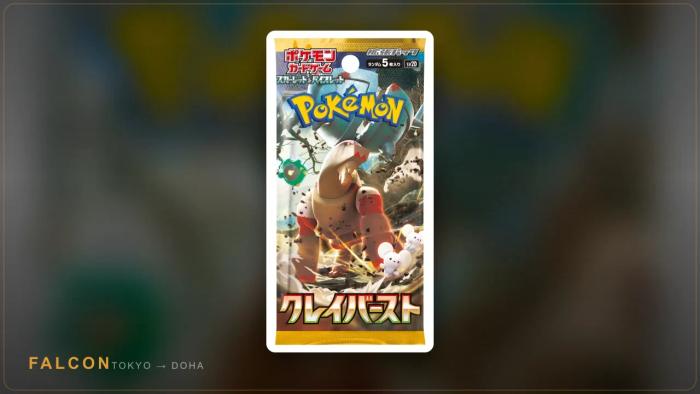
Clay Burst, known in Japanese as SV2D, is one of the most talked about expansions from the early Scarlet and Violet era, and it remains a firm favourite among collectors in Qatar. Released as a Japanese expansion, it paired the Pokemon 151 nostalgia wave with a fresh set of Special Art Rare cards, and its headline card, the Iono Special Art Rare, quickly became one of the defining chase cards of the whole generation. This guide is written for collectors and players in Doha, Al Rayyan, Al Wakrah and across Qatar who want to understand what Clay Burst is, what is actually inside a pack and a box, why it still matters even though it is no longer the newest set on the shelf, and how to buy Japanese Clay Burst packs, singles and sealed boxes sensibly. We will look at the standout cards, the full rarity ladder and pull-rate guidance, how the market for an older set behaves, how to think about value without getting burned, and the practical details that matter when you import Japanese cards into Qatar, including pricing in Qatari Riyal, customs expectations, shipping choices and how to store cards safely in a warm Gulf climate. Prices for trading cards move constantly, so throughout this guide we talk in ranges and trends rather than fixed numbers, and we always encourage you to check a live price snapshot before you commit.
What is Clay Burst (SV2D)?
Clay Burst is a Japanese Scarlet and Violet expansion identified by the set code SV2D. It launched alongside a sister set and formed part of the wave that reconnected the Pokemon Trading Card Game with the original 151 Pokemon, which is a big part of why it caught the attention of both nostalgic collectors and newer players. The set is built around expansion packs, dedicated decks and a range of rarities that climb from ordinary cards up to the sought after Special Art Rare and higher tiers. For collectors in Qatar, the important thing to understand is that SV2D is a Japanese language product, so the cards are printed in Japanese, the packaging is Japanese, and the way you source it is through import rather than a local hobby shop shelf.
Why the set still gets attention
Even though Clay Burst is no longer a current release, it continues to hold interest for a few clear reasons. It contains a genuinely iconic chase card, it sits within a nostalgia driven era that people still actively collect, and the artwork across its rare cards has aged very well. When a set has a memorable signature card and strong art, demand tends to persist long after the set leaves the standard rotation of new products, and that is exactly the pattern Clay Burst has followed.
- Set code: SV2D, a Japanese Scarlet and Violet era expansion
- Known for Special Art Rare cards and a strong nostalgia connection
- Sold as sealed packs, sealed boxes and single cards
- Language: Japanese, so it reaches Qatar through import channels
The Iono SAR and other chase cards
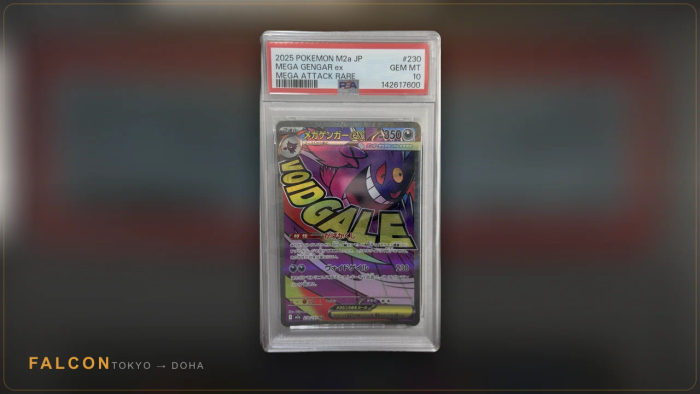
The single card most people associate with Clay Burst is the Iono Special Art Rare, often written as Iono SAR. Iono, known in Japanese as Nanjamo, is a popular character whose card design places her in a full art style illustration that collectors find especially appealing. The Special Art Rare treatment gives the card an expansive, story like artwork that extends across the full card face, and this combination of a beloved character and a striking illustration is what turned it into one of the most desirable trainer cards of its era.
Why trainer Special Art Rares are prized
Special Art Rare cards that feature human characters, sometimes called character rares, have developed a strong following of their own. Unlike a powerful Pokemon card that may be chased mainly for competitive play, a character card like the Iono SAR is collected largely for its art and its subject, which tends to make demand more about long term collecting sentiment than about the current competitive format. That is one reason these cards can hold interest across many years rather than fading when the game rotates.
- Iono SAR is the headline chase card of Clay Burst
- Character Special Art Rares are valued for artwork and character appeal
- Higher rarity tiers above SAR also exist and are scarcer
- Condition and centering strongly affect desirability at this level
Complete guide to contents and pull rates
One of the most common questions from collectors in Qatar is simply what is inside a Clay Burst product. This section walks through the pack and box configuration, the full rarity ladder with what each symbol means, example cards at each tier, a chase card checklist, and honest guidance on pull rates. Please treat every number here as a general guideline. Sealed configurations and odds are set by the publisher and can vary between print runs, so anything below should be verified against the official set list and a current snapshot rather than taken as a guarantee.
Bars show relative frequency; per-set counts are typical approximations that vary by set and are never guaranteed pull rates.
Pack and box configuration
As a standard Japanese Scarlet and Violet expansion, a single Clay Burst pack contains five cards, and a sealed display box holds around thirty packs. Please treat the box figure as a guideline rather than a fixed promise, and confirm the exact configuration for the specific SV2D product you are buying, since counts can differ by product and region.
- Cards per pack: five, the standard configuration for a Japanese Scarlet and Violet expansion
- Packs per sealed box: around thirty as a general guideline for a standard expansion box
- Confirm the exact SV2D configuration before you buy, as counts can vary
The full rarity ladder
Japanese cards use letter symbols to signal rarity, printed near the card number. Understanding this ladder helps you read a listing at a glance and know how scarce a card is meant to be. From most common to most premium, the tiers relevant to Clay Burst are as follows.
- C (Common): the most frequently included cards in the set
- U (Uncommon): slightly scarcer than commons
- R (Rare): standard rare cards, one step above uncommon
- RR (Double Rare): Pokemon ex cards in their standard artwork
- AR (Art Rare): full illustration cards of ordinary Pokemon, prized for their art
- SR (Super Rare): full art versions of ex cards and full art trainer cards
- SAR (Special Art Rare): special illustration ex cards and character trainers, such as Iono
- UR (Ultra Rare): gold hyper rare cards, including gold item and energy cards
Example cards by rarity tier
The names below are examples to illustrate each tier and are not the complete list. Card line-ups and exact numbers should be checked against the official SV2D set list, since the same Pokemon can appear at more than one rarity.
- RR (ex): Chi-Yu ex, Gholdengo ex, Great Tusk ex and Revavroom ex are examples of the set's ex cards
- AR: full art illustrations of ordinary Pokemon from the set
- SR: full art versions of the ex cards and full art trainer cards
- SAR: Iono (Nanjamo) as the headline character card, plus special illustration ex cards
- UR: gold ex such as Gholdengo ex, along with gold item and energy cards
Chase card checklist: key SAR, AR and UR
Use this checklist as a starting point for the higher rarity cards most collectors are looking for in Clay Burst. Because line-ups can vary and the same character may appear at more than one rarity, always confirm the exact card number and rarity against the official set list before you buy or compare prices.
- Iono (Nanjamo) SAR: the headline character trainer card of the set
- Chi-Yu ex SAR: the special illustration of the set's mascot legendary
- Gholdengo ex SAR: a popular special illustration ex
- Great Tusk ex SAR: a special illustration Paradox ex
- Revavroom ex SAR: a special illustration ex tied to the Team Star theme
- SR full art ex and full art trainers as the tier just below SAR
- UR gold cards such as Gholdengo ex, plus gold item and energy cards
- AR full art illustrations of ordinary Pokemon from the set
- Confirm exact card numbers against the official set list, as line-ups vary
Pull rates: rough guidance only
It is natural to want to know your odds, but pull rates should be treated as rough guidance rather than a promise. Higher rarities are rarer by design, so hits are the exception rather than the rule, and any percentage figure you come across is approximate and can vary between print runs. No sealed product carries a guaranteed pull of a specific card.
- Higher rarities are scarce by design, so premium hits are uncommon
- Any pull-rate percentage you see is approximate and can vary by print run
- There is no guaranteed pull of any specific card in sealed product
Pack and sealed box value
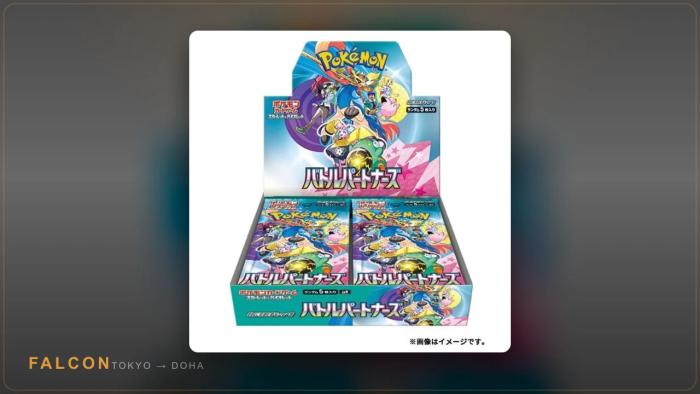
Sealed Clay Burst products, meaning individual packs and full boxes that have never been opened, occupy a different part of the market from single cards. A sealed box is attractive to two very different types of buyer. The first is the collector who wants the experience of opening packs and the chance of pulling a chase card themselves. The second is the buyer who values sealed product as a collectible in its own right, keeping the box unopened because sealed items from popular older sets can develop their own following over time.
Packs versus boxes
Buying single packs is the lower commitment way to enjoy the opening experience, while a full sealed box offers more packs and, for some sets, a better overall opening experience. It is important to be realistic about odds. Chase cards such as the Iono SAR are rare by design, so opening sealed product should be approached as an enjoyable experience first, not as a reliable way to obtain a specific card. If your goal is a particular card in a particular condition, buying that exact single is usually the more direct path.
- Sealed packs: lower commitment, ideal for the opening experience
- Sealed boxes: more packs and a fuller opening session
- Sealed product also appeals to collectors who keep boxes unopened
- Pull rates for chase cards are low, so open for fun, not as a shortcut
How the market for an older set moves
The market for a set like Clay Burst behaves differently from a brand new release. When a set is current, sealed product is widely available and prices tend to be softer. As a set ages and print supply stops, availability of sealed boxes gradually tightens, and attention often concentrates on the best cards and on remaining sealed stock. This does not guarantee that prices always rise, because collector interest, wider trends and overall supply all interact, but it does mean an older set can behave quite differently from week to week compared to a set that is still being printed.
Availability and freshness of information
For an older Japanese set, you may find that some sellers are out of stock while others still hold inventory, and that the range of available conditions for a given single is narrower than it was at release. Because of this, any figure you see should be treated as a snapshot in time rather than a fixed price. Values can move with demand, and a number that was accurate a few weeks ago may no longer reflect the current market.
- Sealed availability tends to tighten as a set ages and printing stops
- Attention often focuses on signature cards and remaining sealed stock
- Prices can move in either direction, not only upward
- Always treat any figure as a snapshot that needs re-checking
Judging value before you buy
Judging value on trading cards is part research and part discipline. The most important habit is to compare like with like. For a single, that means confirming the exact set, the exact card number, the exact rarity and the condition before you compare any prices. A card that looks the same in a thumbnail can be a different rarity or from a different set entirely, and that difference can change the value dramatically. For sealed product, confirm whether you are looking at a single pack, a booster box or another sealed configuration, since these are not interchangeable.
Condition and grading
For higher value singles such as the Iono SAR, condition is a major driver of value. Small differences in surface, edges, corners and centering can separate an ordinary copy from a premium one. Some collectors choose to have important cards professionally graded, which encapsulates the card and assigns a condition score. Grading can add confidence and structure to a purchase, but it also adds cost and time, so it makes most sense on cards where condition materially changes value.
- Confirm set, card number, rarity and condition before comparing prices
- Distinguish singles from sealed packs and boxes clearly
- Condition drives value strongly on high tier cards
- Grading adds confidence but also cost, so weigh it case by case
Buying Clay Burst in Qatar: QAR, customs and shipping
Because Clay Burst is a Japanese product, collectors in Qatar receive it through import. Buying through a service that ships from Japan to Qatar and prices in Qatari Riyal removes much of the friction of currency conversion and cross border logistics. When you plan a purchase, think about three things: the item price, the shipping method and time, and any duties or handling that may apply on import. Treating these as one total cost, rather than only looking at the sticker price of the card, gives you a clearer picture of what you will actually pay.
Customs and delivery expectations
Import charges and clearance procedures in Qatar can vary depending on the value of a shipment and current regulations, so it is sensible to check the latest guidance rather than assume a fixed rate. Shipping choices usually trade speed against cost, with faster express options costing more and economy options taking longer. For higher value orders such as a sealed box or a premium single, tracked and insured shipping is worth considering so that the parcel is protected in transit.
- Buy through a service that ships Japan to Qatar and prices in QAR
- Think in total cost: item, shipping and any import charges together
- Import rules can change, so verify the current guidance before ordering
- For high value orders, prefer tracked and insured shipping
Storing and protecting cards in Qatar's climate
Qatar's climate is hot for much of the year, and heat combined with humidity can be hard on trading cards over time. Warping, surface changes and adhesion of sleeves are all risks when cards are stored badly. The good news is that sensible storage is straightforward. Keep cards indoors in a cooled, stable environment rather than in a car, a garage or anywhere exposed to direct sun. Avoid rapid swings between an air conditioned room and outdoor heat, since condensation can form when a cool item meets warm humid air.
Practical protection steps
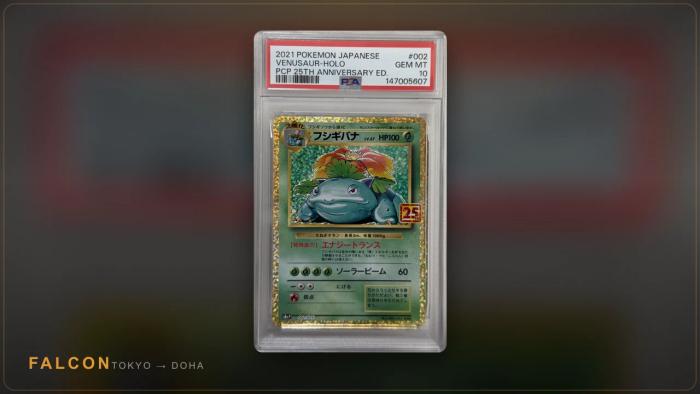
For valuable singles, a penny sleeve inside a top loader or a rigid holder is a simple and effective baseline, and a graded slab provides even more protection for your most important cards. Store cards upright and away from pressure, and keep sealed boxes out of direct light and heat as well, since packaging and wrap can be affected by high temperatures. A little care at the storage stage protects both the enjoyment and the long term condition of your collection.
- Store cards indoors in a cool, stable, air conditioned space
- Avoid cars, garages, direct sunlight and sudden temperature swings
- Use sleeves with top loaders or rigid holders for valuable singles
- Keep sealed product out of heat and direct light as well
Frequently asked questions
What is Clay Burst SV2D and is it still worth collecting in Qatar?
Clay Burst, set code SV2D, is a Japanese Scarlet and Violet era expansion known for its Special Art Rare cards, especially the Iono SAR. Even though it is no longer the newest set, it remains popular because of its iconic chase card, strong artwork and the nostalgia trend around that era, which keeps demand steady among collectors in Qatar.
What cards are inside a Clay Burst pack and box?
A pack contains five cards and a sealed box holds around thirty packs as a general guideline, though you should confirm the exact SV2D configuration. The rarity ladder runs from Common and Uncommon up through Rare, Double Rare ex, Art Rare, Super Rare, Special Art Rare and Ultra Rare gold cards, with the Iono SAR as the headline chase card.
How much does the Iono SAR from Clay Burst cost?
There is no single fixed price. The value of the Iono SAR moves with demand, condition and overall supply, and it can differ significantly between an ordinary copy and a top condition or graded one. Always check a recent market snapshot for the exact SV2D card and rarity, and remember any figure is a point in time reference that can change.
What are the pull rates and how many hits can I expect from a box?
Pull rates are rough guidance only, never a guarantee. Higher rarities are scarce by design, and any percentage you see is approximate and can vary by print run. As a rough concept a box tends on average to yield a small number of ex and a limited number of higher rarity hits such as SR, SAR or UR, but any single box can deliver more or fewer, and a specific card like the Iono SAR is never guaranteed.
Is it better to buy sealed packs and boxes or single cards?
It depends on your goal. Sealed packs and boxes are best if you enjoy the opening experience or want to keep sealed product as a collectible, but chase card odds are low. If you specifically want the Iono SAR or another particular card in a chosen condition, buying that exact single is usually the more direct and predictable route.
How do I buy Japanese Clay Burst cards in Qatar and pay in QAR?
You buy through an import service that ships from Japan to Qatar and prices in Qatari Riyal. Plan for the full landed cost, meaning the item price, the shipping method and time, and any import charges, all in QAR, so there are no surprises when your order arrives.
How should I store Clay Burst cards in Qatar's hot climate?
Keep cards indoors in a cool, stable, air conditioned space and avoid cars, garages, direct sunlight and sudden temperature swings that can cause condensation. Use sleeves with top loaders or rigid holders for valuable singles, consider grading for your most important cards, and keep sealed product out of heat and light as well.