Importing Pokemon Cards to Qatar: The 2026 Shipping, Customs and Delivery Guide
Buying Japanese Pokemon cards from Japan and receiving them safely in Qatar is not complicated once you can see the whole journey laid out in front of you. The problem for most buyers is that the journey is invisible. You place an order, and then there is a quiet stretch of days when the card is somewhere between a shelf in Tokyo and your door in Doha, passing through hands and systems you never see. This guide removes that mystery. It walks the entire path from the moment a card is secured in Japan to the moment you sign for it in Qatar, explaining what happens at each step, what can slow it down, and what you can do to keep everything smooth. It is deliberately long because importing is a chain of small steps, and understanding each one is what turns anxious waiting into calm confidence. One honest promise runs through the whole guide: where the rules involve customs, duties, or taxes, we describe the general mechanism rather than quoting exact numbers, because those figures change and only the official Qatari authorities and your carrier can confirm what applies to your specific parcel on the day it arrives.
How cross-border card shopping actually works, from start to finish
When you buy a Japanese Pokemon card from an overseas store and have it delivered to Qatar, you are taking part in a process called cross-border e-commerce. It sounds technical, but at heart it is simply a chain of ordinary steps performed in sequence by different people and systems. A card is identified and secured in Japan, it is checked and photographed, it is packed to survive travel, it is handed to a shipping carrier, it flies across the world, it arrives in Qatar, it passes through customs clearance, and finally it is delivered to your address. Nothing in that chain is mysterious once you name each link, and naming the links is the first step to feeling in control of the whole thing.
The reason this matters is that most of the worry buyers feel during shipping comes from not knowing which step their parcel is on. A tracking page that has not updated for two days feels alarming if you imagine the worst, but it feels ordinary once you understand that a parcel can sit legitimately in a customs queue or wait for a flight without anything being wrong. Throughout this guide we return to that idea: the antidote to shipping anxiety is a clear mental map of the journey, so that every status update lands in a place you already understand rather than in a void where fear grows.
It also helps to separate two very different situations that both get called shopping. The first is buying something that is already in stock and ready to ship. The second is a sourced or pre-order item, where the card is obtained on your behalf after you commit, which naturally adds time before the parcel can even begin its journey. These are not the same experience, and honest stores keep them clearly distinct so you always know whether you are waiting for a card to be shipped or waiting for a card to be found and then shipped. We treat that distinction as important because your expectations about timing depend entirely on which of the two you are dealing with.
Finally, understand that a cross-border order involves at least three separate parties working together: the store that secures and prepares the card, the shipping carrier that moves it between countries, and the customs and delivery system in Qatar that receives it. No single party controls the entire journey, which is why a good store is honest about where its responsibility ends and where the carrier and the authorities take over. The rest of this guide follows the parcel through each of these hands in order, so you always know who is doing what and what you can reasonably expect from each of them.
- A card is identified and secured in Japan, either from existing stock or sourced on your behalf.
- The card is inspected, verified, and photographed so you know exactly what you are receiving.
- It is packed with protection suited to a long international journey.
- It is handed to a shipping carrier and given a tracking number.
- It travels by air toward Qatar and is scanned at each handover.
- It arrives in Qatar and passes through customs clearance.
- Any duties, taxes, or fees that apply are handled according to the carrier and the authorities.
- It is delivered to your address, or held for collection or redelivery if you are out.
Sourcing the card in Japan: where your order really begins
Every import begins in Japan, and the very first step decides a great deal about how smoothly the rest will go. For an item that is already in stock, this step is short: the specific card you ordered is pulled from where it is stored and moved into preparation. For a sourced or pre-order item, this step is where the real work happens, because the card must first be located, checked for authenticity and condition, and secured before it can ever be prepared for shipping. Understanding which of these two paths your order follows is the single most useful thing you can know about your delivery timeline.
It is worth being honest about why sourced items take longer. When a card is not already sitting on a shelf, it has to be found in the Japanese market, and the Japanese market does not run on demand alone. Popular cards can be scarce, prices move, and a responsible store will not confirm a sourced order as secured until it genuinely has the card in hand and has verified it. This is a feature, not a delay for its own sake. The alternative, confirming a sale before the item is actually secured, is exactly the kind of risky shortcut that leads to cancelled orders and disappointed buyers, and it is something a careful store deliberately avoids.
This is also why a trustworthy store never treats a single external listing as proof that an item can be sold. One listing somewhere is a lead, not a guarantee. Cards get sold, listings go stale, and condition is not always as described until it is inspected in person. A careful sourcing process treats external information as a starting point to investigate rather than a fact to sell on, which protects you from paying for something that turns out not to exist or not to match its description.
For you as the buyer, the practical takeaway is simple. When you order an in-stock item, your clock starts almost immediately, and the main variable is shipping and customs. When you order a sourced or pre-order item, there is an earlier phase of securing the card that happens before shipping even enters the picture, and you should read the timing information for that item with that phase in mind. A store that keeps these two situations clearly separated is doing you a favor, because it lets you form accurate expectations instead of vague hopes.
Inspection and verification before anything is packed
Before a card is wrapped for its journey, it goes through inspection, and this is one of the most valuable steps in the entire chain even though the buyer rarely sees it happen. Inspection is where a real human being looks at the actual card, confirms it is what it claims to be, checks its condition against what was described, and photographs it so that there is an honest record of exactly what left Japan. For a buyer thousands of kilometers away who cannot hold the card first, this step is the closest thing to standing in the shop yourself.
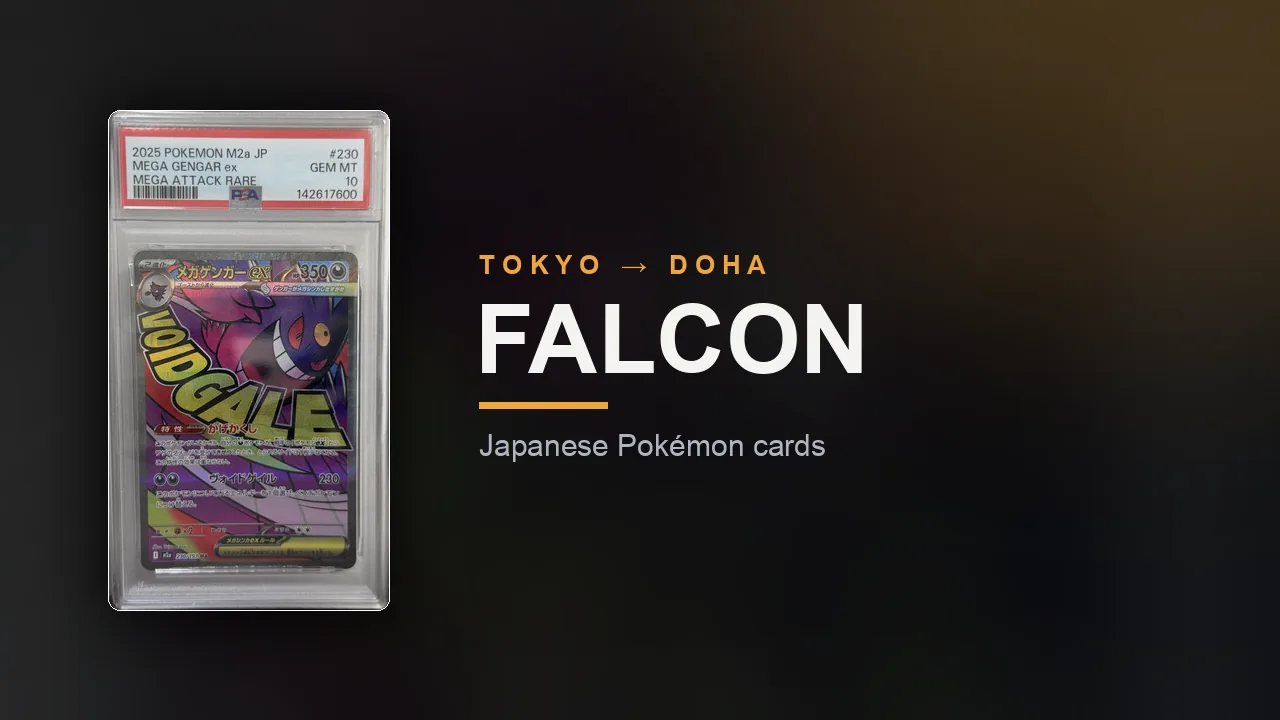
For graded cards, inspection means confirming that the sealed case is intact, that the label and grade match the card inside, and that the certification details are consistent with the grading company records. A graded card in a sealed slab carries its own protection and its own proof, so the inspection focuses on verifying that the case has not been tampered with and that everything on the label agrees with the card it holds. This verification is what lets you trust that the grade you paid for is the grade you will receive.
For raw, ungraded cards, inspection is about honest condition reporting. A careful inspector looks at the corners, edges, surface, and centering, notes anything worth knowing, and photographs the real card rather than relying on a generic or borrowed image. The point is not to make every card sound perfect. The point is to make sure the card you receive matches the card you saw when you decided to buy, so there are no unpleasant surprises when the parcel is opened in Qatar.
This inspection step is also the last, best moment to catch a problem before it travels across the world. A card that fails inspection never gets packed and shipped, which spares you the far more painful process of discovering a problem only after it has arrived. Think of inspection as a checkpoint that exists entirely for your benefit: it filters out issues while they are still cheap and easy to handle, long before customs, distance, and time make them complicated.
How cards are packed to survive an international journey
Packing is where a card journey is quietly won or lost. A card can be authentic, beautifully conditioned, and perfectly inspected, and still arrive damaged if it is packed carelessly, because an international parcel is handled many times, stacked under other packages, loaded and unloaded from aircraft, and moved through sorting machines. Good packing assumes rough handling as the normal case rather than the exception, and it is built to protect the card even when the journey is not gentle.
The core principle of protecting a single card is layered defense. The card is first held in a snug sleeve that keeps its surface clean and prevents it from sliding around. It is then placed in a rigid holder that stops bending, because bending is the most common way a card is ruined in transit. That rigid unit is then cushioned inside an outer package with padding that absorbs shocks and keeps the card away from the edges of the box, where impacts are strongest. Each layer does a different job, and together they turn a fragile piece of cardboard into something that can survive a long trip.
Graded cards in slabs already carry a strong layer of protection, but they are not indestructible and they still need care. A slab protects the card from bending and surface contact, yet the case itself can crack or chip if it is allowed to knock against hard surfaces, so a well-packed slab is cushioned so that the case never takes a direct impact. The goal is to deliver not just an intact card but an intact case, because for a graded card the case is part of what you are paying for.
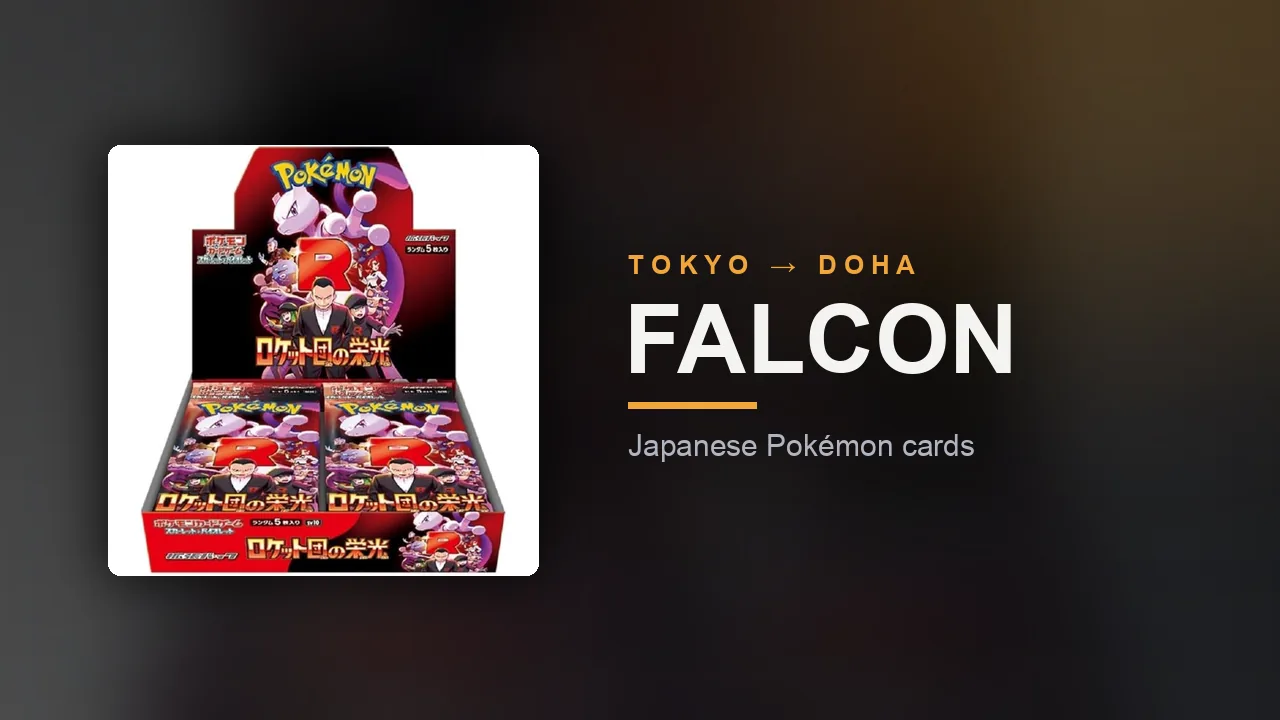
Sealed products such as booster boxes bring their own packing challenge, because for sealed items the packaging is the product. A dented box corner or a scuffed wrap reduces value even if the cards inside are untouched, so sealed products are packed to shield the wrap and the corners from pressure and impact. That usually means firm cushioning around the whole item and enough rigidity in the outer package that the box is never squeezed or crushed by whatever is stacked on top of it during transit.
There is also a quiet discipline in not over-advertising what is inside a parcel. A well-packed shipment protects its contents without shouting about their value on the outside, which is simply sensible for anything worth protecting. The aim throughout is the same: the parcel should look ordinary from the outside and be genuinely fortress-like on the inside, so the card or sealed product arrives in exactly the condition it left Japan.
Insured shipping, carriers, and why the label matters
Once a parcel is packed, it is handed to a shipping carrier, and this is the moment the card leaves the store hands and enters the international transport system. The carrier is the company that physically moves your parcel from Japan to Qatar, and different carriers offer different balances of speed, cost, tracking detail, and handling of customs. The choice of carrier shapes much of your delivery experience, which is why it deserves attention rather than being treated as an afterthought.
Insurance is one of the most important features to understand. Shipping insurance is a protection that covers the declared value of a parcel if it is lost or damaged in transit, within the terms and limits set by the carrier. It does not make a parcel indestructible, and it does not remove the need for good packing, but it does mean that if the worst happens during transport, there is a defined process for making things right rather than a simple loss. For valuable items like collectible cards, shipping with appropriate insurance and tracking is a basic expectation, not a luxury.
The shipping label and the accompanying customs paperwork matter more than most buyers realize. The label carries your address and the tracking number, while the customs documentation describes what is inside and its declared value. Accurate, honest paperwork is what lets a parcel move smoothly through customs, while vague or incorrect paperwork is a common cause of delays. A responsible store completes this documentation carefully and truthfully, because trying to cut corners here does not help anyone and often makes clearance slower, not faster.
It is worth stating plainly that once a parcel is in the carrier hands, the physical movement of it is controlled by the carrier and, later, by the authorities in Qatar, not by the store. A good store stays engaged, monitors tracking, and helps you when something goes wrong, but it cannot personally accelerate a flight or clear a customs queue. Understanding this division of control helps you direct your questions to the right place and keeps your expectations grounded in how the system actually works.
How long does delivery to Qatar take, realistically
Delivery time is the question every buyer asks first, and the honest answer is a range rather than a single promised number. An international parcel from Japan to Qatar passes through several stages, and each stage can take anywhere from a short time to a longer one depending on factors outside anyone direct control: how quickly the parcel is dispatched, flight schedules, the speed of the chosen carrier service, how busy customs is when the parcel arrives, and local delivery conditions. Because these factors vary, any responsible estimate is expressed as a window, not a guarantee.
A useful way to think about total time is to break it into three parts: preparation, transit, and clearance and final delivery. Preparation is how long it takes to inspect, pack, and dispatch the parcel, which is quick for in-stock items and longer for sourced or pre-order items. Transit is the international movement itself, which depends heavily on the carrier service level. Clearance and final delivery is the time the parcel spends going through customs in Qatar and then being delivered to your door, which can be quick or can take extra days if the parcel is selected for closer inspection.
The single most variable part of this is customs clearance, because it is the one stage that is genuinely outside the control of both you and the store. Most parcels clear without incident, but any parcel can be held for a closer look, and when that happens it simply takes longer. This is normal, it is not a sign that anything is wrong, and it is precisely why honest stores describe delivery in ranges and avoid promising an exact arrival date they cannot control.
The best mindset is to treat any quoted delivery window as a reasonable expectation rather than a countdown to a fixed deadline. Plan for the longer end of the range rather than the shorter end, especially around busy periods when both carriers and customs handle heavier volumes. If your card arrives sooner, that is a pleasant surprise. If it takes toward the longer end of the estimate, that is still within the range of normal and rarely a cause for concern.
Reading your tracking number and understanding each scan
A tracking number is your window into the journey, and learning to read it turns a source of anxiety into a source of reassurance. When your parcel is handed to the carrier, it is assigned a unique tracking number, and every time the parcel is scanned along the way, a new status appears on the carrier tracking page. Each scan is a checkpoint that tells you where the parcel is and what has just happened to it, so following the scans is like watching your parcel travel across a map in slow motion.
The statuses you see generally follow the same story every time. First the parcel is accepted or dispatched, meaning the carrier has taken possession of it. Then it moves through export processing in the origin country and departs on a flight. Next it arrives in the destination country and enters customs. After clearance it moves to local delivery, and finally it is out for delivery and then delivered. Once you recognize this sequence, any single status makes sense because you know what comes before it and what comes next.
The status that worries buyers most is a tracking page that seems to stop updating, and this is worth understanding calmly. A gap in scans does not mean the parcel is lost. Parcels routinely sit without a new scan while they wait for a flight, sit in a customs queue, or move between facilities that do not scan at every handover. A quiet tracking page is usually a parcel that is simply between checkpoints, not a parcel in trouble, and the update almost always appears once it reaches the next scan point.
The most important status to watch for is any message indicating that customs needs something from you, or that the parcel is being held pending information or a payment. These messages are the ones that genuinely require your action, and responding to them promptly is the single most effective thing you can do to keep your parcel moving. Everything else on the tracking page is information to observe, but a request for action from customs or the carrier is a cue to act quickly.
Arrival in Qatar: how customs clearance generally works
When your parcel arrives in Qatar, it enters customs, which is the official process by which goods entering the country are checked and cleared for delivery. At a general level, customs clearance exists so that the authorities can see what is entering the country, confirm it is permitted, and apply any duties or taxes that the law requires. This is a normal part of importing anything from abroad, and the vast majority of ordinary parcels pass through it without any problem.
The general mechanism works like this. The parcel arrives with customs documentation describing its contents and declared value. The authorities review that documentation, and in many cases the parcel is cleared quickly on the basis of the paperwork alone. In some cases a parcel is selected for closer examination, which may mean the authorities look at it more carefully or request additional information before releasing it. Whether a given parcel is examined closely is not something the store or the buyer controls, and selection can happen for many routine reasons.
It is important to be precise about who does what here. The customs process in Qatar is administered by the Qatari authorities, and the carrier acts as the party that presents your parcel and often handles the mechanics of clearance on your behalf. The store in Japan prepares honest documentation and hands the parcel to the carrier, but it is not present at the border and cannot make clearance decisions. When you have a question about the status of a parcel in customs, the carrier and the official authorities are the sources that can actually answer it.
Duties, taxes, and fees: the general idea, not a promise
Importing goods into a country can involve duties, taxes, and handling fees, and it is important to understand these in general terms while being honest that the exact figures are not something this guide can promise. A customs duty is a charge that a country may apply to certain imported goods. A tax may also apply to imports under the applicable rules. And carriers sometimes charge their own handling or processing fees for managing customs clearance on your behalf. These are separate things that can appear together, and their presence and size depend on rules that are outside the store control.
What we will not do in this guide is quote you a specific duty rate, a specific tax percentage, a specific threshold, or a specific fee, because those numbers change over time and depend on details of your parcel, its declared value, and how the rules are applied on the day it arrives. Quoting a precise figure that later turns out to be wrong would be worse than useless, because you might plan around it and be caught out. Instead, we describe the shape of the system and point you firmly to the sources that can give you a current, accurate answer for your situation.
The practical way to handle this is to budget for the possibility of import charges rather than assuming there will be none, and to confirm the current rules before you commit if the amount matters to your decision. The right sources are the official Qatari customs authority for the rules themselves, and your carrier for how those rules will be applied to your particular parcel and how any charges will be collected. Between those two sources you can get an accurate picture, whereas any number quoted secondhand should be treated as a rough illustration at best.
It also helps to know how charges are typically collected, in general terms. Depending on the arrangement, import charges may be collected by the carrier at or before delivery, or handled as part of the shipping arrangement in other ways. The point to remember is that if an import charge applies, someone has to pay it before the parcel is released, and knowing in advance that this is a possibility means you will not be surprised by a request to settle a charge in order to receive your card.
Prohibited and restricted goods: the general picture
Every country maintains rules about what may and may not be imported, dividing goods broadly into those that are freely allowed, those that are restricted and need special handling or documentation, and those that are prohibited outright. Collectible trading cards such as Pokemon cards are ordinary printed collectibles and are generally the kind of everyday item that people import without difficulty. That said, the final decision about whether any specific item may enter the country always rests with the authorities, not with the store or the buyer.
The honest position is therefore a calm one: trading cards are normally unproblematic to import, but normally is not the same as guaranteed, and the authorities are the ones who decide in any given case. We say this not to worry you but to be accurate, because the alternative, promising that a card will always sail through, would be claiming certainty about a decision that is genuinely not ours to make. In practice, an honestly declared parcel of collectible cards is about as routine an import as exists, and problems are uncommon.
Where care is genuinely worthwhile is in honest declaration. A parcel that is described accurately and truthfully, with its real contents and a fair declared value, is far less likely to run into difficulty than one that is vague or misleading. Trying to disguise contents or understate value is not a clever shortcut, it is exactly the kind of thing that can cause a parcel to be held, and it undermines the very smoothness you are trying to achieve. Honesty in the paperwork is both the lawful approach and the practical one.
Who is responsible for what: understanding DDP, DDU, and the honest version
International shipping uses a set of terms to describe who is responsible for costs and risks at each stage, and two you may encounter are worth understanding in general. DDP, meaning delivered duty paid, describes an arrangement where the seller takes on responsibility for import duties and taxes so that the buyer does not pay them separately on arrival. DDU, sometimes expressed as delivered duty unpaid or delivered at place, describes an arrangement where the buyer is responsible for import duties and taxes when the parcel arrives. These are general concepts used across the shipping industry.
We explain these terms here purely as general knowledge so that you recognize them if you see them, not as a statement of any particular store policy. The specific arrangement that applies to your order is something the store you buy from must tell you clearly, and it should be stated in the store own shipping terms rather than assumed. Different stores make different choices, and the only reliable way to know which applies to you is to read the terms of the specific store and order in front of you.
The reason this matters to you is money and expectations. Under one arrangement you might pay import charges yourself when the parcel arrives, and under another they might be handled as part of what you already paid. Neither is inherently better, but not knowing which applies is how people get surprised. Before you complete a purchase, make sure you understand who is responsible for any import charges, so that whatever happens at delivery is something you already expected rather than a shock.
The address and contact details that prevent delays
A surprising number of delivery problems come from something entirely within your control: the address and contact information you provide. A parcel can only be delivered as accurately as the address it carries, and in cross-border shipping a small mistake in an address can cause outsized delays because the systems handling your parcel are automated and unforgiving of ambiguity. Getting your details right at the moment of ordering is one of the highest-value things you can do to ensure a smooth delivery.
Give a complete and precise address, including every element that helps a courier find you, and make sure the version you enter matches how deliveries actually reach you where you live. Include a reliable phone number, because carriers frequently need to contact the recipient to arrange delivery, confirm details, or resolve a customs question, and an unreachable recipient is one of the most common reasons a parcel stalls near the end of its journey. A working phone number is not a formality, it is often the difference between a smooth delivery and a parcel stuck at a depot.
It is also wise to be reachable during the delivery window and to respond quickly to any message from the carrier. Toward the end of the journey, the carrier may attempt delivery, ask you to confirm details, or request that you settle any applicable charge, and a prompt response keeps everything moving. A parcel that is ready to deliver but cannot reach its recipient will wait, and that waiting is entirely avoidable with a little attentiveness at the right moment.
Delivery, missed attempts, and redelivery in Qatar
The final step of the journey is delivery, and it is worth understanding how it usually works so that a missed attempt does not become a lost parcel. When a parcel clears customs and reaches local delivery, the carrier attempts to deliver it to your address. For valuable items, delivery may require a signature or some confirmation that the right person received it, which is a protection for you even though it means you need to be available or make arrangements to receive the parcel.
If the first delivery attempt is unsuccessful because no one is available, the carrier does not simply give up. Depending on the carrier, the parcel may be held for you to collect from a local point, or a redelivery may be arranged for another time, and the tracking page or a message from the carrier will usually tell you which option applies and what you need to do. The key is to act on that information promptly, because parcels held for collection are typically kept for a limited period before being returned, and you do not want your card to start traveling back the way it came.
This is another moment where your attentiveness pays off directly. Watching your tracking as the parcel approaches, staying reachable during the delivery window, and responding quickly to any redelivery or collection instruction are simple actions that reliably turn a near-miss into a successful delivery. The final stretch of the journey is the one part where your own behavior has the most direct influence on the outcome, so it rewards a little care.
If a parcel is delayed, damaged, or lost: the general process
Even with careful packing, insured shipping, and honest paperwork, occasionally something goes wrong in transit, and it helps to understand the general shape of what happens then, without pretending any single outcome is guaranteed. The three situations worth thinking about are a parcel that is delayed, a parcel that arrives damaged, and a parcel that appears to be lost. Each has a different sensible response, and knowing them in advance keeps a stressful moment from becoming a panicked one.
If a parcel is delayed
A delay is by far the most common of the three and by far the least serious. Most delays resolve themselves, because the parcel is simply waiting for a flight, sitting in a customs queue, or between scans. The right response to a delay is usually patience combined with attention: keep watching the tracking, respond immediately to any request from the carrier or customs, and give the process reasonable time before treating it as a genuine problem. A delay is rarely a lost parcel, and treating every quiet day as a crisis only adds stress without changing the outcome.
If a parcel arrives damaged
If a parcel arrives with visible damage, the important thing is to document it. Photograph the packaging and the contents before you do anything else, keep all the packing materials, and note the condition exactly as it arrived. This documentation is what supports any claim, because insurance and carrier processes depend on evidence of what happened. Report the damage promptly to the relevant party and follow the process they set out, since claims generally have time limits and are far easier to resolve while the evidence is fresh.
If a parcel appears to be lost
A parcel that genuinely cannot be located is the rarest case, and it is also the reason insured shipping and tracking exist. If a parcel has not moved for an unusually long time and inquiries confirm it cannot be found, the general process involves the carrier investigation and, where applicable, an insurance claim for the declared value within the carrier terms and limits. This is exactly the situation that insurance is designed for, and while it is never a pleasant experience, it is a defined process rather than a simple loss when the shipment was properly insured and documented.
How FALCON works to reduce risk at every step
Everything described so far is the general anatomy of importing cards to Qatar, and it applies no matter where you buy from. What a careful store adds on top of that is a deliberate effort to reduce risk at each link in the chain, so that the parts within its control are handled well and the parts outside its control are navigated honestly. FALCON is built around exactly this idea, and it helps to see how the general process maps onto a specific, careful way of working.
It begins with our base in Tokyo. Cards are inspected and photographed in our Tokyo office before they are shipped, which means a real person looks at the actual card, confirms it against what was described, and creates an honest record of the exact item that will travel to Qatar. This is the inspection step described earlier, done deliberately rather than skipped, and it is the reason a buyer far away can trust that the card in the photograph is the card in the parcel.

From there, the discipline continues through packing and shipping. Cards are packed with protection suited to a long international journey, sealed products are packed to shield their corners and wrap, and shipments are sent with tracking and appropriate insurance so that there is a safety net if the worst happens in transit. None of this makes customs faster or removes the authorities from the picture, but it does mean that the parts of the journey FALCON genuinely controls are handled with care rather than left to chance.
Just as important is honesty about the limits of that control. FALCON is an independent reseller of Japanese Pokemon cards and is not affiliated with, endorsed by, or officially connected to the makers of Pokemon or to any grading company. It does not control customs, it does not set duty or tax rules, and it does not guarantee arrival dates, because those things belong to the carriers and the authorities. What it offers instead is careful preparation, honest information, genuine photographs, insured and tracked shipping, and a clear account of who is responsible for what, so that you can import with realistic expectations and real support.
A practical pre-purchase checklist for buyers in Qatar
It helps to gather the practical points from this guide into a short checklist you can run through before you commit to an import. None of these steps is difficult, and together they remove most of the avoidable friction from a cross-border order. Think of this as the small amount of preparation that makes the difference between a smooth import and a stressful one.
- Confirm whether the item is in stock or a sourced or pre-order item, so you understand the timeline before shipping even begins.
- Check that the listing shows genuine photographs of the actual card, not a generic image.
- Understand that any quoted delivery time is a range, and plan for the longer end rather than the shortest promise.
- Read the store shipping terms to learn who is responsible for any import duties and taxes on your order.
- Budget for the possibility of import charges, and verify current rules with the Qatari customs authority and your carrier if the amount matters.
- Enter a complete, precise address and a reachable phone number, and double-check them before you confirm.
- Make sure your shipment includes tracking and appropriate insurance for a valuable item.
- Plan to watch the tracking near delivery and respond quickly to any message from the carrier or customs.
Running through this list takes only a few minutes, but it addresses nearly every common cause of delay or disappointment in a cross-border card order. The recurring theme is simple: control the things you can control, form accurate expectations about the things you cannot, and stay reachable and responsive at the moments when your action actually matters.
Important limitations and a closing word
This guide is intended to help you understand the general shape of importing Japanese Pokemon cards to Qatar so that you can approach it with confidence rather than confusion. It is general information, not legal, customs, or tax advice, and it deliberately avoids quoting specific duty rates, tax percentages, thresholds, deadlines, or fees, because those figures change and depend on the details of your particular parcel. For anything that will affect a real decision, the authoritative sources are the official Qatari authorities and your chosen carrier, and their current guidance always takes precedence over anything summarized here.
It is also worth repeating the honest division of control that runs through the whole guide. A careful store can inspect, verify, photograph, pack, document, and ship your card with insurance and tracking, and it can stay engaged and help you when something goes wrong. It cannot control customs decisions, set or waive duties and taxes, or guarantee an exact arrival date, because those belong to the authorities and the carriers. Good service is honest about that line, and any promise that ignores it should make you cautious rather than reassured.
Finally, remember that FALCON is an independent reseller of Japanese Pokemon cards, not affiliated with or endorsed by the makers of Pokemon or any grading company. Its value lies in doing the controllable parts of the journey carefully and describing the uncontrollable parts honestly. If you carry away one thing from this guide, let it be that a well-prepared, honestly declared, insured, and tracked parcel from Japan to Qatar is a routine and manageable thing, and that most of the worry around it dissolves the moment you can see the whole journey clearly.
Frequently asked questions
How long does it take for a Pokemon card to arrive in Qatar from Japan?
The honest answer is a range, not a single number. Total time depends on preparation, international transit, and customs clearance in Qatar, and customs in particular is outside anyone control. In-stock items are quicker to dispatch than sourced or pre-order items, and any parcel can take longer if it is selected for a closer customs look. Treat any quoted time as a window, plan for the longer end, and confirm current service times with your carrier.
Will I have to pay customs duties or taxes on my cards?
Import duties, taxes, and carrier handling fees can apply when goods enter a country, but the exact figures change over time and depend on your specific parcel, so this guide deliberately quotes no numbers. The right approach is to budget for the possibility of import charges and to confirm the current rules with the Qatari General Authority of Customs for the regulations, and with your carrier for how they apply to your parcel and how any charge is collected.
Are Pokemon cards allowed to be imported into Qatar?
Collectible trading cards such as Pokemon cards are ordinary printed collectibles and are generally routine to import. However, the final decision about whether any specific item may enter the country always rests with the Qatari authorities, not with the store or the buyer. Honest, accurate declaration of contents and value is the best way to keep an import smooth, and official guidance is always the final word.
My tracking has not updated for a few days. Is my parcel lost?
Almost certainly not. Gaps between scans are normal while a parcel waits for a flight, sits in a customs queue, or moves between facilities that do not scan at every step. A quiet tracking page usually means the parcel is between checkpoints. The status that genuinely needs your attention is any message asking you for information or a payment from customs or the carrier, which you should respond to promptly.
How are the cards packed for such a long journey?
Single cards get layered protection: a snug sleeve, a rigid holder to prevent bending, and cushioning inside the outer package so the card is kept away from the box edges. Graded cards in slabs are cushioned so the case never takes a direct impact. Sealed products are packed to shield their corners and wrap from pressure, because for sealed items the packaging is part of the value. Good packing assumes rough handling as the normal case.
Is my shipment insured, and what does that actually cover?
Valuable items should be shipped with tracking and appropriate insurance. Shipping insurance covers the declared value of a parcel if it is lost or damaged in transit, within the terms and limits set by the carrier. It is a safety net for the worst case, not a substitute for careful packing and not a guarantee against every problem. If loss or damage occurs, there is a defined claims process rather than a simple loss.
What should I do if my parcel arrives damaged?
Document everything before doing anything else. Photograph the packaging and the contents as they arrived, keep all the packing materials, and note the condition exactly. Report the damage promptly to the relevant party and follow the process they set out, because claims generally have time limits and are much easier to resolve while the evidence is fresh. Specific outcomes depend on the carrier and insurer terms.
Who is responsible for import duties, the seller or me?
That depends on the shipping arrangement for your specific order. General industry terms like DDP, where the seller handles duties, and DDU, where the buyer handles them, describe the possibilities, but the arrangement that applies to you is whatever the specific store shipping terms state. Always read those terms before you buy so you know in advance who is responsible for any import charges at delivery.
What happens if I miss the delivery?
If the first delivery attempt is unsuccessful, the carrier does not simply give up. Depending on the carrier, the parcel may be held for collection at a local point or a redelivery may be arranged, and the tracking page or a message will tell you which applies. Act on it quickly, because parcels held for collection are usually kept only for a limited period before being returned. Staying reachable near delivery is the best way to avoid this.
Is FALCON connected to Pokemon or to the grading companies?
No. FALCON is an independent reseller of Japanese Pokemon cards and is not affiliated with, endorsed by, or officially connected to the makers of Pokemon or to any grading company. It inspects and photographs cards in its Tokyo office and ships them with tracking and insurance, but it does not control customs, set duty or tax rules, or guarantee arrival dates, because those belong to the carriers and the Qatari authorities.