How to Pay for Pokemon Cards in Qatar: Payment, Delivery and Safe Receiving Guide
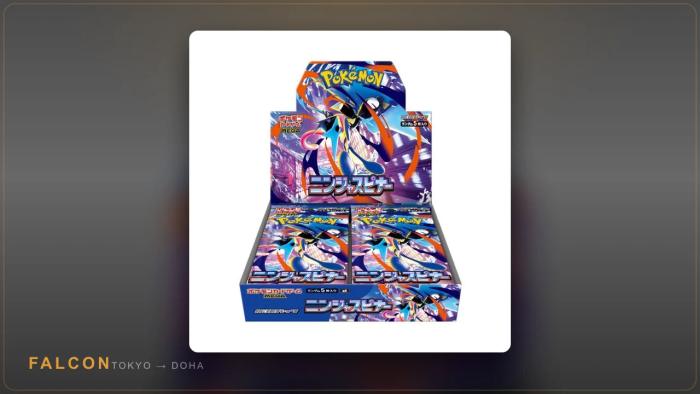
Buying Pokemon cards online from Japan while living in Qatar raises a set of very practical questions before you ever add a card to your cart. How much will you actually pay in Qatari riyal once the exchange rate is applied? Which cards work at checkout, and is it safe to enter them? How long does an international parcel take to reach Doha, and will you be asked to pay anything when it arrives? And perhaps most importantly, how do you know the seller is genuine and that the card inside the sleeve is the real thing? This guide walks through each stage of a cross-border purchase, from the moment you see a price to the moment the card is in your hands. Because currency values, shipping fees and customs rules all change over time, we describe how the process works and what to check rather than quoting fixed numbers you should never rely on blindly. Treat every figure here as a general reference to confirm at the time of your order, and use the checklist mindset throughout so that your first purchase feels as safe as your tenth.
Understanding prices in Qatari riyal
Most Japan-based card shops list prices in Japanese yen, and a store serving Qatar will typically show you an amount in Qatari riyal so you can shop in a familiar currency. The riyal figure is derived from the underlying yen price using an exchange rate, so the same card can appear slightly different from one day to the next as rates move. This is normal and not a sign of price manipulation. When you compare listings, look at whether the displayed QAR figure already includes shipping and any handling, or whether those are added later at checkout.
A trustworthy storefront makes the total transparent before you confirm. You should be able to see the item price, the shipping cost, and any additional fees as separate lines, then a clear grand total in QAR. If a price seems dramatically lower than everywhere else for the same card in similar condition, treat that as a warning rather than a bargain and read the listing details carefully.
Why the final charge on your statement may differ slightly
Even when a store quotes you a QAR total, the actual settlement may pass through the card network, which applies its own reference rate at the moment the transaction is processed. Your bank may also add a foreign transaction fee for international purchases. As a result, the amount that lands on your statement can differ by a small margin from the on-screen total. These differences are usually minor, but it is worth knowing they exist so an unexpected line on your statement does not alarm you.
Payment methods that work from Qatar
The most widely accepted way to pay is an international credit or debit card. Visa and Mastercard issued by Qatari banks are generally supported by online stores that ship internationally, and the checkout will convert or display the amount in QAR for you. Before ordering, confirm that your card is enabled for international and online transactions, as some banks keep these switched off by default and let you toggle them in the mobile banking app.
Cards and digital wallets
- Visa and Mastercard credit or debit cards are the standard option and are accepted by most international storefronts.
- Apple Pay lets you check out using a card already stored in your iPhone or iPad wallet, which avoids typing card numbers on the page.
- Google Pay offers the same convenience on Android devices, again drawing on a card you have already added to your wallet.
- Some stores also support alternative online payment services; check the checkout page to see the current list of accepted methods.
Digital wallets such as Apple Pay and Google Pay add a layer of safety because the merchant receives a device-specific token rather than your actual card number. If your phone supports them and the store offers them, they are often the smoothest and most secure route. Whichever method you choose, look for signs that the payment page is secure, such as a padlock in the browser and a web address that begins with a secure prefix.
How your cards are shipped from Japan
Cross-border parcels from Japan to Qatar usually travel by an international postal or courier service. A common option is an express postal service often referred to as EMS, alongside private couriers that offer their own express and economy tiers. The right choice balances speed, cost and the level of tracking and protection you want. For valuable single cards or sealed products, a tracked and insurable service is strongly preferred over the cheapest untracked option.
Tracking and insurance
Tracking gives you a number you can enter on the carrier website to follow the parcel from dispatch in Japan, through customs, to delivery in Qatar. It is your main reassurance that the shipment is genuinely moving and your proof if anything goes wrong. Insurance, where offered, covers loss or damage in transit up to a declared value; the cost usually scales with that value. For a high-value order, the small added insurance cost is often worth the peace of mind.
- Confirm before ordering whether the shipping method includes end-to-end tracking.
- Check whether insurance is available and up to what declared value.
- Keep the tracking number and order confirmation until the parcel is safely received and checked.
- For expensive items, favour a fully tracked and insured service even if it costs a little more.
Customs, duties and receiving the parcel
When a parcel arrives in Qatar it passes through customs. Depending on the declared value and the applicable rules at the time, there may be import duties or charges to settle before the item is released for final delivery. Many international orders are shipped on a basis where the buyer is responsible for any such charges on arrival, sometimes described as delivery at place. That means the price you paid the store covers the goods and shipping, but local import charges, if any, are separate and payable by you.
What to expect on arrival
In practice, the carrier or postal service will contact you or present any charge at the point of delivery, and you settle it to receive the parcel. Amounts depend on the goods value and current regulations, so we cannot quote a fixed figure and you should treat this as an item to confirm. Keeping your order confirmation handy helps if you are asked to show the value of the contents.
- Understand before ordering whether import charges are your responsibility on arrival.
- Have your order confirmation and any invoice available in case the value needs to be verified.
- Do not ignore a customs notice or a carrier message, as unclaimed parcels can be delayed or returned.
- If a charge seems unexpected, contact the carrier or the store to clarify rather than refusing the parcel outright.
How long delivery takes
Delivery time from Japan to Qatar depends on the shipping service, how quickly the order is prepared and dispatched, and how long customs processing takes on arrival. Express services are naturally faster than economy options, but the total door-to-door time is a range rather than a promise, and customs can add unpredictable days. A responsible store gives you an estimated window and a dispatch confirmation rather than an exact guaranteed date.
Factors that can add days
- Whether the item is in stock and ready, or is being sourced to order before it can ship.
- Public holidays and peak seasons in either country that slow processing.
- Customs inspection, which can occasionally hold a parcel for extra checks.
- Delivery address details, since an incomplete or unclear address can cause failed delivery attempts.
Spotting a trustworthy seller
The single most important safeguard is choosing where you buy. Because you are paying in advance for an item shipped from abroad, the credibility of the store matters more than a marginal price difference. Look for a clear business identity, transparent policies, and honest descriptions of each card, including its condition and, where relevant, its grading. A store that explains how it verifies authenticity and that is upfront about the difference between stock it holds and items it sources to order is showing you the professionalism you want.
Signs of a reliable store
- Clear, itemised pricing in QAR with shipping shown before you confirm.
- A secure checkout and recognised payment methods rather than requests for informal transfers.
- Detailed, honest condition descriptions and real photos of the actual item where appropriate.
- A stated policy on authenticity, returns and what happens if an item arrives damaged or not as described.
- Responsive customer support that answers questions before you buy, not only after.
Be wary of listings that use vague stock claims. A phrase like a stated availability should come with an indication of how fresh that information is; a card described as available with no sense of when that was confirmed deserves a question to the seller. Similarly, distinguish between items the store physically holds and items it will obtain for you after you order, because the timeline and cancellation terms can differ.
Authenticity, returns and receiving with confidence
Concerns about counterfeits are reasonable, and a good store addresses them directly. Ask how authenticity is checked and whether higher-value cards come professionally graded, which provides an independent assessment of both genuineness and condition. Understand the store's position if a card ever turns out not to be as described, and read the returns terms before you buy rather than after a problem appears. Clear, written policies are a hallmark of a seller that expects to keep your business over time.
Checks to make when the parcel arrives
- Inspect the outer packaging for signs of tampering before opening.
- Confirm the card matches the listing in set, condition and any grading described.
- Keep the packaging and all documentation until you are fully satisfied.
- Photograph the item on opening, which helps if you need to raise any issue with the store or carrier.
- Contact the store promptly if anything is not as expected, referencing your order number.
Frequently asked questions
Can I pay in Qatari riyal when buying Pokemon cards from a Japan-based store?
A store serving Qatar will usually display prices and a checkout total in Qatari riyal, derived from the underlying yen price using an exchange rate. Because rates move, the riyal figure can vary slightly day to day, and your bank may apply a small foreign transaction fee, so the amount on your statement can differ marginally from the on-screen total. Always confirm the live total at checkout.
Which cards and payment methods are accepted?
Visa and Mastercard credit or debit cards are the standard option and are widely accepted for international orders, provided your card is enabled for online and international transactions in your banking app. Apple Pay and Google Pay are often supported too and add security because the merchant receives a token rather than your card number. Check the checkout page for the current list of accepted methods.
How will my cards be shipped and can I track them?
Parcels from Japan typically travel by an international express postal service such as EMS or by a private courier. Choose a tracked service so you can follow the parcel from dispatch through customs to delivery, and consider insurance for valuable orders. Keep your tracking number and order confirmation until the parcel is safely received and checked.
Will I have to pay customs or duties when the parcel arrives in Qatar?
Depending on the declared value and the rules in force at the time, there may be import charges to settle on arrival before the parcel is released, often with the buyer responsible for these. We do not quote fixed amounts because they vary by value, weight band and current regulations. Keep your order confirmation available in case the value needs to be verified, and treat any customs charge as something to confirm.
How long does delivery from Japan to Qatar take?
Delivery time is a range rather than a fixed promise. It depends on the shipping service you choose, how quickly the order is dispatched, whether the item is in stock or sourced to order, and how long customs takes on arrival. Express services are faster than economy ones. Use the tracking number to follow progress and allow a buffer around important dates.
How do I know a seller is genuine and the card is authentic?
Choose a store with a clear business identity, transparent itemised pricing in QAR, a secure checkout, honest condition descriptions and a written policy on authenticity and returns. Ask how authenticity is checked and whether high-value cards are professionally graded. Be cautious of prices that seem too good to be true or any request to pay outside the official checkout.
What should I check when the parcel arrives?
Inspect the outer packaging for tampering before opening, then confirm the card matches the listing in set, condition and any grading. Keep the packaging and documentation until you are satisfied, and photograph the item as you open it. If anything is not as expected, contact the store promptly with your order number so it can be resolved quickly.