How to Grade Pokemon Cards from Qatar: A Practical 2026 Guide
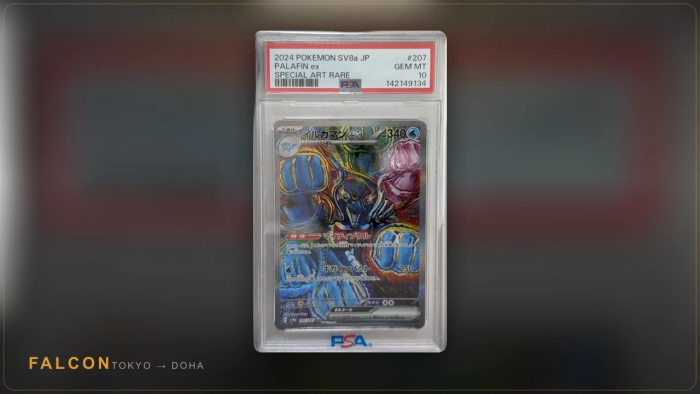
If you collect Pokemon cards in Qatar and you have started to wonder whether one of your cards deserves to be graded, this guide is written for you. Grading is the process of sending a card to a specialist company that authenticates it, assigns a condition grade on a numbered scale, and seals it inside a tamper-evident plastic case. Doing this from the Gulf raises questions that guides written for buyers in the United States or Japan simply do not answer, because from here every submission is an international shipment that has to leave the country, travel to a grading facility abroad, and come back through customs. This guide walks through the whole journey in plain language, from deciding whether a card is worth grading at all, to choosing a company, to packing a card so it survives the summer heat, to getting the finished slab back into Qatar. Throughout, we avoid quoting hard numbers as if they were fixed, because fees, timelines, and duties change and depend on your specific situation. Read this as a map of the terrain, not as a price list.
Before anything else: a few honest disclaimers
We want to set expectations honestly before you read another word. Grading is a useful service, but it is often described online in breathless terms that promise transformation of a cheap card into a small fortune. That is not how it works in practice, and we will not pretend otherwise. Most cards that people consider grading are not worth the cost of grading them, and a large part of this guide is dedicated to helping you decide, calmly and before you spend anything, whether your particular card belongs in the small group that genuinely benefits.
We are also writing as a seller, which means we are not a neutral party. We sell graded and raw singles to customers in Qatar, so you should read our advice with that in mind. We have chosen to be candid about the costs and the risks because a customer who understands them and proceeds anyway is a happier long-term customer than one who felt oversold. Take that candor as a reason to trust the caution here, not as a reason to skip your own research.
Finally, a note on the numbers you will see. Wherever this guide mentions a cost, a number of days, or a customs percentage, treat it as a rough snapshot that was reasonable at the time of writing and nothing more. Grading companies change their pricing tiers, couriers change their rates, and customs rules are set by authorities that can revise them. We give ranges to help you plan, not precise figures to rely on. The single most valuable habit you can build is to verify every important number at its official source right before you act.
Why grading matters before you buy or sell
The first question worth answering is not how to grade a card, but why grading exists at all. When two people trade a valuable card, they face two problems that are surprisingly hard to solve between strangers. The first is authenticity: is the card genuine, or is it a convincing counterfeit or an altered card. The second is condition: how good is it really, given that everyone describes their own cards generously. Grading companies exist to answer both questions with an independent, consistent, and hard-to-fake verdict, and that is the whole value they add.
For a buyer, a graded card removes a large amount of uncertainty. Instead of squinting at photographs and trusting a description, you see a card that a specialist has examined under magnification, confirmed as genuine, judged against a published standard, and sealed so it cannot be swapped or tampered with afterward. That certainty is precisely what buyers are willing to pay extra for, and it is why the same card can command a meaningfully different price raw versus graded. The premium is not magic; it is the market pricing in reduced risk.
For a seller, grading can widen your audience and reduce disputes. A serious buyer far away, who cannot inspect your card in person, is much more comfortable paying a strong price for a slab with a recognized label than for a raw card they must take on faith. This matters especially for cross-border sales, which describes almost every meaningful sale into or out of Qatar. A trusted grade travels well; a personal promise does not.
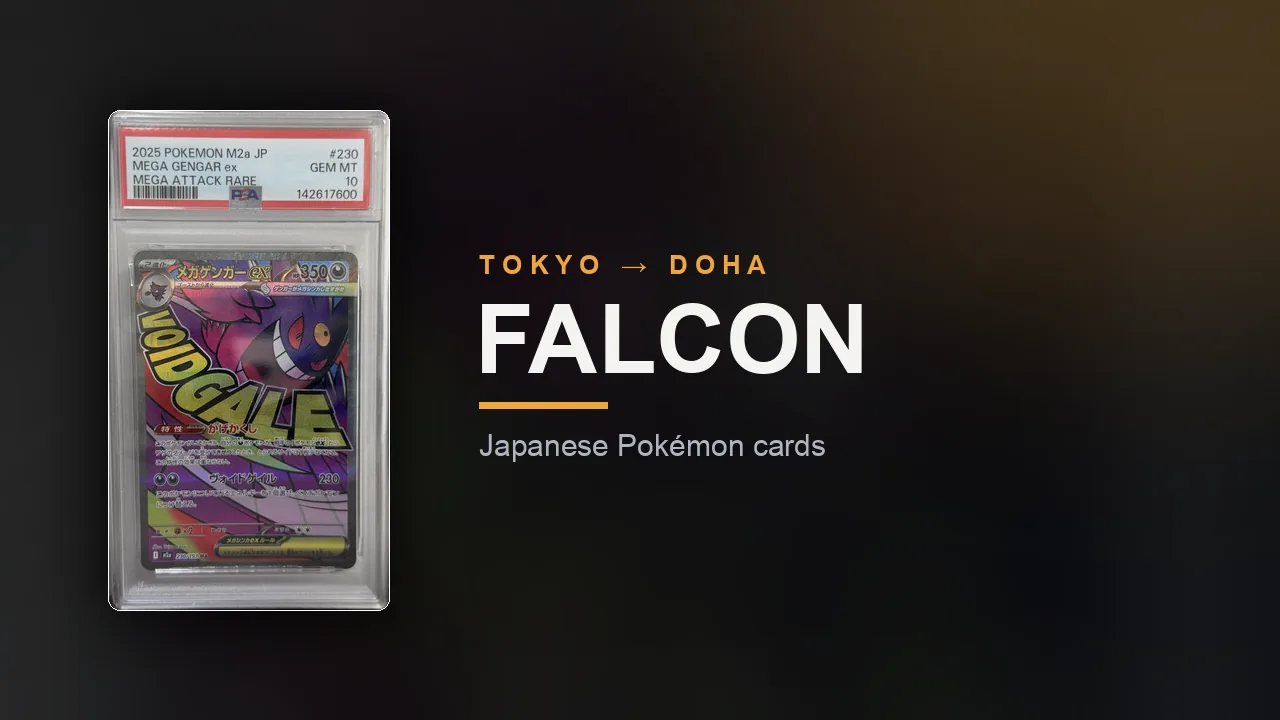
None of this means grading is always the right move. A grade adds cost and time, and it only pays off when the certainty it provides is worth more than what it costs to obtain. For a common card worth a few riyals, the grade will cost far more than any premium it could add, and grading it would simply destroy value. The art is in telling the two situations apart, which is why we return to this decision several times in this guide rather than assuming the answer is always yes.
There is one more quiet benefit of a grade that is easy to overlook: it settles arguments before they start. Condition is subjective, and two honest people can look at the same card and describe it quite differently, which is fertile ground for disputes, hurt feelings, and awkward refunds. An independent grade replaces all of that with a single agreed reference point that neither buyer nor seller controls. In a hobby that is meant to be enjoyable, removing a whole category of potential conflict has a value that does not show up in any price chart, but that anyone who has ever argued over a card condition will recognize immediately.
What a grade actually means, and what it does not
It helps to understand what a grader is really doing before you send a card halfway around the world to receive one. In broad terms, a grader authenticates the card and then evaluates its condition across a handful of familiar factors: the centering of the printed image within its borders, the sharpness of the four corners, the condition of the edges, and the state of the surface including scratches, print lines, and whitening. These factors are combined into a single number on a scale that, for the major companies, runs up to a top grade reserved for cards that look essentially flawless under scrutiny.
- Centering: how evenly the image sits within the card borders, front and back.
- Corners: whether the four corners are sharp and undamaged under magnification.
- Edges: whether the edges are clean, without nicks, chips, or whitening.
- Surface: scratches, print defects, indentations, scuffing, and gloss.
What a grade is not is a statement of value or a prediction about the future. A high grade does not promise that a card will rise in price, and no grading company claims otherwise. The grade is a snapshot of condition and a confirmation of authenticity, nothing more. Prices are set by a market of buyers and sellers, and they move for reasons that have nothing to do with the plastic case: shifts in what is popular, new reprints, wider economic conditions, and simple changes in taste. Treat the grade as reliable information about the card, and treat any hope of profit as your own uncertain assumption.
It is also worth remembering that grading involves human and procedural judgment, and there is a natural variation in outcomes. Two thoughtful people can disagree about whether a corner is sharp enough for the top grade, and the same card can occasionally receive different grades on different days or from different companies. This is not a scandal; it is the nature of any fine judgment made near a threshold. It does mean you should never assume a specific grade in advance, and you should never spend money on the confident expectation of a perfect result.
Because the top grades are so much more valuable than the ones just below them, tiny differences that are almost invisible to a casual eye can translate into large differences in outcome. A speck on the surface, a corner that is a fraction soft, or centering that is slightly off can be the difference between a very strong grade and a merely good one. This is humbling, and it is exactly why cards that look perfect in a phone photo do not always come back perfect. Treat your own optimistic assessment with healthy suspicion, look at the card critically under good light, and assume the grader will notice the small things that you were tempted to overlook.
PSA vs CGC vs ACE: choosing from the Gulf
Three names come up most often when collectors in the Gulf discuss grading: PSA, CGC, and ACE. Each is an independent company with its own history, its own reputation among collectors, and its own approach to pricing and turnaround. We are not affiliated with any of them, and we are not going to tell you that one is universally best, because the right choice depends on what you value and on the specific card in front of you. Instead, here is a fair way to think about the decision.
Recognition and resale
The most practical factor for most sellers is how widely a given label is recognized and trusted by the buyers you hope to reach. A grade only helps you sell if your buyers respect it, so the label with the broadest recognition in your target market tends to carry the strongest resale advantage, sometimes regardless of any technical differences between companies. If you plan to sell into a particular community, look at what slabs actually change hands there and let that guide you rather than online arguments about which grader is strictest.
Cost, speed, and specialty
Companies differ in their fee tiers, their typical turnaround, and their particular strengths. Some are known for fast service on modern cards, others for authority on older or higher-value items, and their pricing structures reward different declared values in different ways. Because these details change over time, the honest advice is to compare the current published tiers of each company for your specific card, rather than relying on a reputation that may be a year out of date.
One more consideration specific to the Gulf is logistics. Some companies are easier to reach from this region because they have submission routes, authorized dealers, or drop-off partners closer to home, while others require a longer international journey. That practical accessibility, which we cover in the next two sections, can matter as much as any difference in grading philosophy, because a slightly cheaper grade is no bargain if getting the card there and back is far harder.
It is worth resisting the urge to overthink the choice of company to the point of paralysis. Collectors can spend weeks debating which grader is fractionally stricter on centering or slightly faster this month, and in the meantime nothing gets graded and no decision is ever made. For the great majority of cards, any of the well-known companies will authenticate honestly and grade competently, and the differences that dominate online arguments are far smaller in practice than the difference between grading a suitable card and grading an unsuitable one. Choose a reputable company that your buyers respect, confirm its current terms, and move on. The energy you save is better spent on packing and paperwork, which is where real submissions actually succeed or fail.
Method A: submitting internationally direct from Qatar
The most direct approach is to send your card yourself, as an international shipment, from Qatar to the grading company. In this method you register your submission with the company through its official process, complete their forms and declared values, pack the card to their requirements, and hand the parcel to an international courier for delivery to their facility abroad. When grading is finished, the company ships the sealed slab back to you, and it re-enters Qatar through customs. You remain the single point of responsibility for the whole chain, which is both the strength and the weakness of this method.
The strength is control and simplicity of relationship. There is no middleman, no third party holding your card, and no extra hands touching it. You deal directly with the grading company, you see their official confirmation of receipt, and you know exactly where your card is in the process. For a valuable card that you are anxious about, that directness can be reassuring, and it removes any question about a middleman marking up the service.
What direct submission demands from you
- A courier service that offers tracking and, ideally, insurance suitable for a small high-value item.
- Accurate customs paperwork on the way out, declaring the card honestly for what it is.
- A clear understanding of the grading company current intake process, which you must confirm on their official channels.
- Patience for a round trip that includes two international legs plus the grading time in between.
- A plan for the return leg, including how the finished slab clears Qatar customs and any charges that may apply.
The weakness of direct submission is that every logistical burden falls on you, and international shipping of small valuable items is genuinely fiddly. You are responsible for choosing a reliable courier, for filling out customs declarations correctly in both directions, and for absorbing the cost and stress if anything goes wrong in transit. For many collectors this is entirely manageable and even satisfying. For others, especially those grading for the first time or shipping a particularly valuable card, the second method is worth serious consideration.
If you do choose to ship directly, build a small routine and follow it the same way every time, because consistency is what prevents the silly and expensive mistakes. Use the same trusted courier, keep a simple checklist of the forms you need, and photograph the card and the sealed parcel before every send. Write down the tracking number in the same place each time and check it against the grading company confirmation of receipt once the parcel lands. None of this is difficult, but the discipline of doing it identically on every submission is what turns international shipping from a nerve-wracking gamble into a boring, repeatable, and safe part of the hobby.
Method B: using a GCC intermediary and UAE drop-off hubs
The second approach is to use an intermediary within the Gulf region rather than shipping directly to a distant facility yourself. In recent years the collecting scene across the GCC, and particularly in the United Arab Emirates, has grown enough that drop-off points, authorized dealers, and group-submission services have appeared closer to home. With this method you hand your card to a trusted regional partner, who consolidates it with other submissions and manages the international leg on your behalf, then returns the finished slab to you once it comes back.
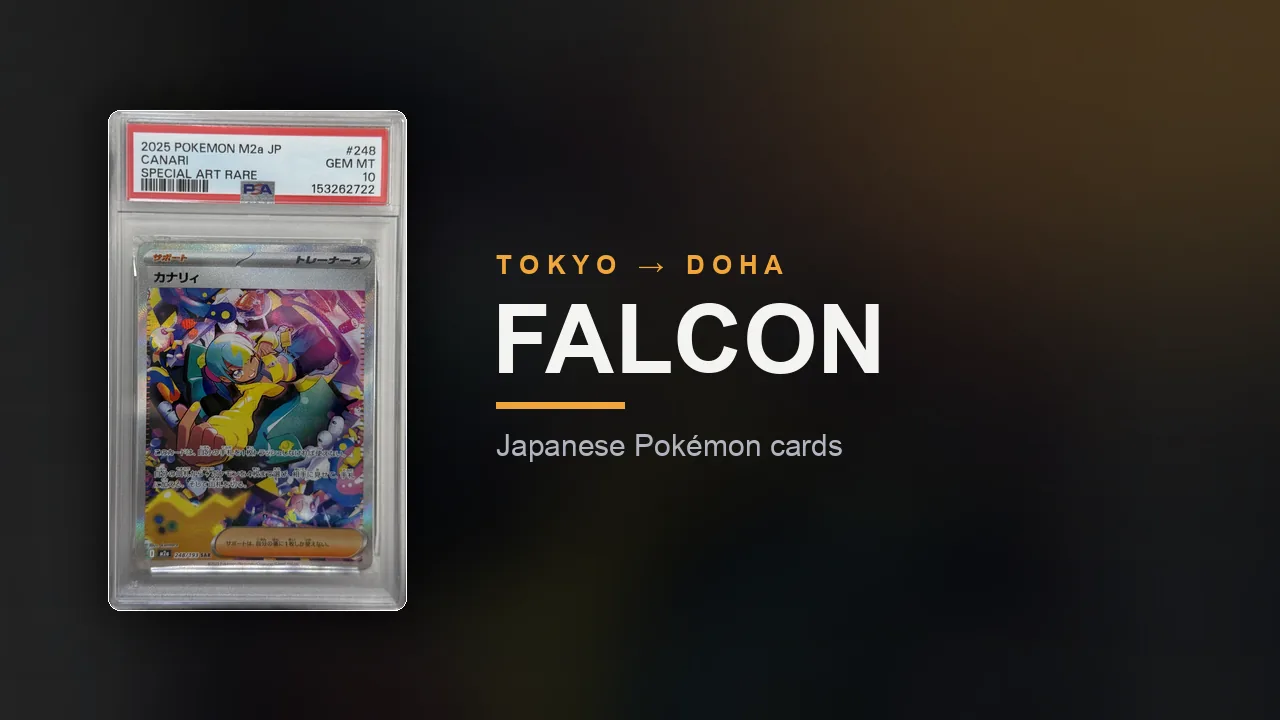
The appeal of this route is that it removes much of the international-shipping burden from your shoulders. A regional hub that handles submissions regularly will usually have refined its packing, its paperwork, and its courier relationships, and by grouping many cards together it may spread certain costs across submitters. For a first-time grader in Qatar, handing a card to a nearby partner who does this every week can feel far less daunting than arranging a solo international shipment to another continent.
The trade-offs to weigh
The trade-off is that you are now trusting a third party with your card, and you are one step further from the grading company itself. The quality of your experience depends entirely on the intermediary you choose, so their reputation, their transparency about fees, their insurance arrangements, and the clarity of their handoff records all matter enormously. A good partner is a genuine convenience; a careless one adds risk without adding value. Do your own diligence, ask exactly who handles the card at each step, and get every agreement in writing.
There is no universally correct choice between doing it yourself and using an intermediary. A confident shipper with a modest card may prefer the directness and control of Method A, while a cautious first-timer with a valuable card may sleep better using a reputable Method B partner. Many collectors use both over time, choosing per submission based on the value of the card and how comfortable they feel with the logistics that day.
What grading really costs: ranges, not promises
One of the most common mistakes is to think of grading as a single fee, when in reality it is a stack of separate costs that only make sense when you add them together. If you look only at the headline grading fee, you will badly underestimate the total, and you may grade a card that never had a chance of being worth it. The honest way to plan is to list every cost category, estimate a range for each, and then judge whether the sum is justified by the card in front of you.
The cost categories to add up
- The grading fee itself, which usually depends on a tier tied to the declared value of the card and the speed you choose.
- Outbound international shipping from Qatar, with tracking and insurance appropriate to the value.
- Return shipping of the finished slab back to Qatar, which is a second international leg.
- Insurance for both legs, which may be bundled with shipping or purchased separately.
- Any intermediary or handling fees if you use a regional partner rather than shipping yourself.
- Possible customs charges when the slab re-enters Qatar, which you must confirm officially.
- Payment, currency conversion, or handling charges that can quietly add up.

When you add these together, the total cost of grading a single card is often considerably higher than the headline grading fee alone, especially once two international shipping legs and insurance are included. This is exactly why grading only makes sense above a certain card value: the fixed costs of shipping and insurance do not shrink for a cheaper card, so they eat a larger and larger share of any premium the grade might add. For a modest card, the total can easily exceed the entire value of the card itself.
A useful discipline is to write down your honest estimate of the total, all categories included, and then ask a blunt question: even in a good outcome, is the likely graded value enough above the raw value to cover this whole stack of costs and still leave the exercise worthwhile. If you cannot answer yes with a comfortable margin, the card probably should not be graded. This is not pessimism; it is simply respecting arithmetic, and it will save you money more often than any tip about which grader is strictest.
It also helps to plan for the small but real possibility that the outcome disappoints you. A card can come back a grade lower than you hoped, and the costs you paid do not come back with it. Some collectors then consider resubmitting in the hope of a better result, which means paying the whole stack of fees and shipping a second time with no guarantee of improvement. We mention this not to discourage you, but so that your budget and your expectations both account for it from the very start. Plan for the realistic outcome rather than the perfect one, and any pleasant surprise then becomes a bonus instead of the assumption your whole plan quietly depended on.
How long grading takes: turnaround expectations
Patience is part of the price of grading, and it helps to set realistic expectations before you start. The total time from when your card leaves your hands to when the finished slab is back in Qatar has three parts: the outbound shipping leg, the grading time at the company, and the return shipping leg. Each part varies, and only the middle part is set by the grading company; the two shipping legs depend on couriers, customs, and distance.
In practical terms, a submission from Qatar is best thought of in weeks rather than days, and during busy periods it can stretch considerably longer. The grading time you select is only one piece; the international shipping and any customs handling on both ends add real time that is outside the grading company control. If you are grading a card for a specific deadline, such as a planned sale, build in a wide margin, because the one thing you cannot do is rush a submission that is already in transit.
It is also wise to avoid the temptation to always pay for the fastest tier. Speed is genuinely expensive, and for most cards the extra cost of an express tier is not justified by any real benefit, since you are usually not on a tight deadline. Choose the fastest service only when you have a concrete reason, and otherwise let a slower, cheaper tier do its work while you wait. Treat the whole thing as a slow-cooked process, and you will be far less frustrated than someone who expected it to be quick.
A practical habit is to keep a simple log of when you sent each submission and what turnaround the company was advertising at the time, so you have a realistic sense of when to start expecting news rather than refreshing a tracking page anxiously every day. Grading is one of those processes where checking obsessively changes nothing except your own stress level. Send the card, record the details, set a sensible reminder for roughly when you might expect movement, and then get on with the rest of your life. The slab will arrive when it arrives, and no amount of worrying will bring it home a single day sooner.
Preparing cards for heat and humidity before shipping
This is the section that guides written for cooler climates simply skip, and it matters enormously here. The Gulf summer is hot, and cards are made of paper and foil, two materials that do not enjoy heat, humidity, or the swing between a fiercely air-conditioned indoor space and the blast of outdoor air. A card that has warped, absorbed moisture, or developed surface problems on its journey can lose condition before it ever reaches the grader, which is a heartbreaking and entirely avoidable way to lower your grade.
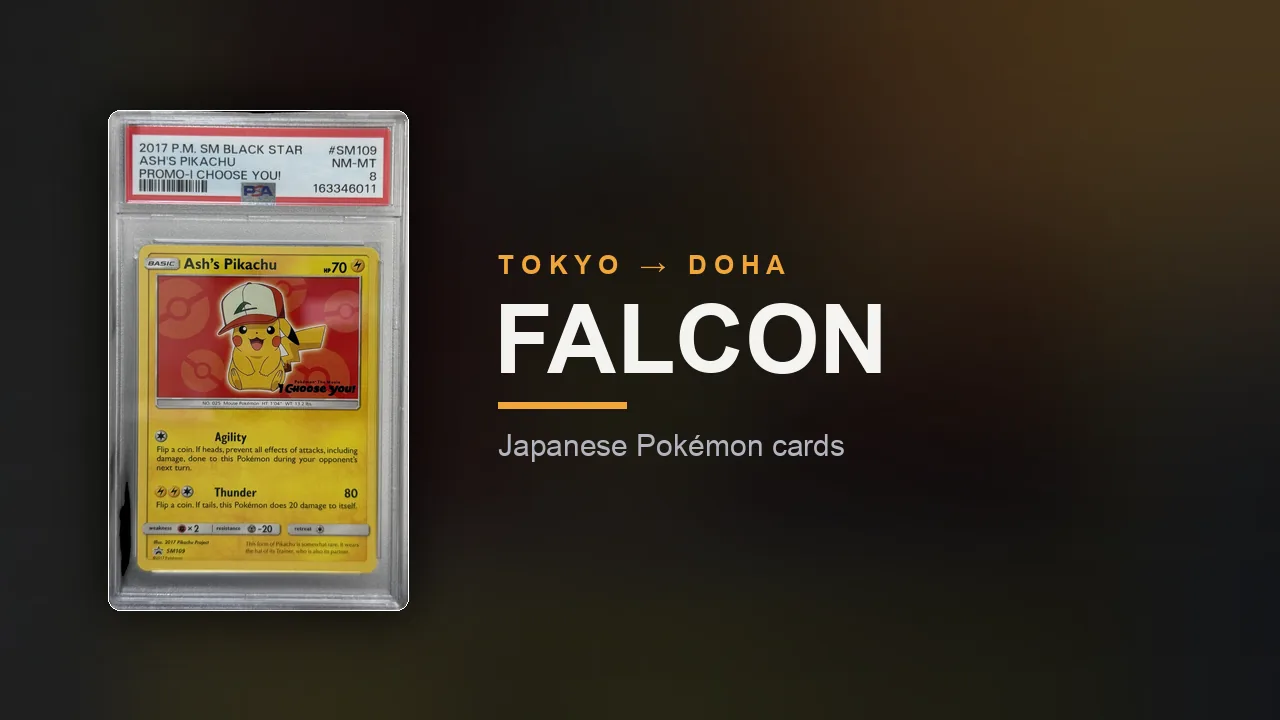
Practical protection for the climate
- Sleeve the card in a soft penny sleeve, then place it in a rigid top loader or card saver so it cannot bend or flex.
- Keep the card away from direct sunlight and never leave a parcel in a hot car or in a sun-facing spot even briefly.
- Avoid sudden temperature swings where possible, since moving a card rapidly between cold air conditioning and outdoor heat encourages condensation.
- Consider the humidity: a small amount of moisture control in the package can help, but never let anything touch the card surface directly.
- Do not seal a warm, humid card into an airtight package, because trapped moisture is worse than none at all.
The underlying principle is simple: a card is most vulnerable when it is exposed to heat, moisture, or physical stress, and shipping subjects it to all three at once. Your job is to reduce each of them. Rigid protection handles physical stress, careful timing and shade handle heat, and thoughtful packing handles moisture. None of this is expensive or complicated, but skipping it can quietly cost you a grade level, which on a valuable card is a real loss.
It is worth handling the card as little as possible, and always by the edges, ideally after washing and drying your hands. Fingerprints, tiny scratches, and dust that you introduce during packing are exactly the kind of surface flaws a grader notices under magnification. Prepare your card in a clean, cool, indoor space, take your time, and resist the urge to keep taking it out to admire it, because every handling is another chance to add a flaw.
If you are storing cards for any length of time before shipping, the same climate logic applies to your storage as to your packing. A cool, dry, shaded place away from windows is far kinder to paper and foil than a spot that bakes in the afternoon sun or sits near a source of humidity. Cards that live in good conditions arrive at the grading stage in the condition you remember, while cards left in heat can quietly degrade over months in ways you only notice when a grader points them out. Treat good storage as part of the grading process that begins long before you ever pack a parcel.
Packing and insuring a submission that leaves Qatar
Once the card itself is protected, the parcel around it needs the same care. A grading submission is a small, light, valuable target, and the packaging has two jobs: to protect the card from crushing and bending, and to be discreet and secure so the parcel does not advertise its contents. Good packing is cheap insurance against the most common causes of in-transit damage, and it costs almost nothing beyond a little attention.
- Protect the sleeved-and-held card between rigid pieces so it cannot flex, and tape the holder closed without letting tape touch the card.
- Surround it with padding inside a sturdy box or rigid mailer so nothing shifts and no external pressure reaches the card.
- Keep the outside plain and unremarkable, avoiding any labeling that announces the value of the contents.
- Choose a courier service with full tracking and declared-value insurance appropriate to the card.
- Photograph the card and the packed parcel before sealing, and record the tracking number and every receipt.
It is easy to treat packing as an afterthought once the exciting decision to grade has been made, but the parcel is where many avoidable losses happen. A card that was perfectly prepared can still arrive bent because the box was flimsy, or be lost because the service had no tracking. Spend the extra few minutes and the small extra cost to pack properly and ship with a real, insured, tracked service. On a valuable card, this is the cheapest protection you will buy in the whole process.
Customs, duties, and getting slabs back into Qatar
Every graded card returning to Qatar is an import, and imports can be subject to customs procedures and possible charges. The finished slab travels back from the grading facility abroad and must clear customs on arrival, just like any other international parcel. Exactly what applies depends on rules that are outside our control and that we will not restate as if they were fixed, because doing so would be misleading. What we can offer is a sensible way to prepare so that the return leg does not surprise you.
How to prepare for the return leg
- Before you ship out, check the current import rules with Qatar customs or a licensed broker so you know what to expect when the slab returns.
- Keep the outbound paperwork and receipts, which help establish that the returning item is your own card coming back from a service.
- Budget for the possibility of import charges in your total cost estimate rather than being caught out.
- Be ready to provide honest documentation of the card value and the nature of the shipment if asked.
- If the value is high or the rules are unclear, consider using a licensed customs broker who handles this professionally.
The reason we refuse to quote specific customs figures is not evasiveness; it is accuracy. Duty rates, tax treatment, and thresholds are exactly the kind of detail that changes and that varies by circumstance, and a confident number in a guide like this would be the most likely thing to be wrong by the time you read it. The reliable move is always the same: verify at the official source, immediately before you act, for your specific shipment. Build that habit and the customs step becomes a manageable known rather than a nasty surprise.
It is also worth understanding that the same slab may be treated differently depending on how it travels and how it is declared, which is another reason a single quoted figure would mislead. A parcel sent by one service may be handled differently from one sent by another, and the paperwork you attach shapes how smoothly it clears. This is not a reason to be anxious, only a reason to prepare: ask the courier and, if the value warrants it, a licensed broker how your specific return shipment is likely to be treated, and keep your documentation clean and honest so there are no avoidable questions on arrival. Preparation turns customs from a source of dread into a routine step you have already thought through.
When grading is not worth it
Because so much of the online conversation pushes toward grading everything, it is worth being equally clear about when you should not grade. This is not a minor footnote; for most cards most of the time, the right answer is to leave them raw. Knowing when to stop is one of the most valuable skills a collector can develop, and it will save you far more money than any grading tip.
- The card value is low: if the whole stack of grading and shipping costs approaches or exceeds the card value, grading destroys value rather than adding it.
- The condition is visibly flawed: obvious whitening, creases, scratches, or poor centering will cap the grade, and a low grade rarely justifies the cost.
- You intend to keep it forever and simply enjoy it: if you will never sell and do not need the authentication, the grade may add little for you personally.
- The card is common and easily replaced: grading is most useful for scarce or high-value cards, not for ones anyone can buy cheaply raw.
- You are chasing a guaranteed profit: if the only reason to grade is a hope of flipping for gain, remember that no outcome is guaranteed and the costs are real and upfront.
There is also an emotional trap worth naming. It is easy to become attached to the idea that a favorite card must be perfect and must be certified, and that attachment can override the arithmetic. Be honest with yourself about whether you are grading for a sound practical reason or simply because the process is exciting. Both are valid ways to spend your hobby money, but you should at least know which one is driving the decision, so you are not surprised by the bill.
A useful exercise, before you send anything, is to imagine explaining your decision to a sensible friend who does not share your excitement. If you can lay out the value, the condition, the full cost, and the reason you expect the grade to be worth it, and it still sounds reasonable said out loud, then you probably have a sound case. If the explanation starts to lean on hope, on a feeling that the card simply must be special, or on a number you have not actually checked, that is a signal to pause. The cards you are gladdest you graded are almost always the ones you could justify calmly in advance, not the ones you talked yourself into.
How FALCON handles its own graded singles
Since we sell singles into Qatar, it is fair to explain how we treat grading on our side, so you understand what you are buying when a card in our catalog is described as graded. We are an independent reseller, and when we list a graded single we are passing along a card that carries an independent company slab and label, not making any grading claim of our own. We do not grade cards ourselves, and we are not affiliated with any grading company.

For a graded single we sell, the value we add is careful sourcing, honest description, and safe delivery, not a second opinion on the grade. We describe each card plainly, we show it as it is, and we let the slab and its label speak for the condition and authenticity. If a card is raw rather than graded, we say so clearly and never imply a grade it does not have. Our aim is that you always know exactly what you are receiving, with no blurring between a graded card and a raw one.
If you buy a raw single from us and later decide you want it graded, everything in this guide applies to you exactly as it would to any card you already own. We are happy to be a starting point for your collection, but the decision to grade, and the process of doing so, remains yours to weigh using the same honest arithmetic we have described throughout. We would rather you grade one card that truly merits it than a dozen that do not.
Authentication versus grade: spotting trouble before you spend
One reason people grade is not the number at all, but the authentication that comes with it. In a market with valuable cards, counterfeits and altered cards exist, and a genuine independent authentication is a real protection. But you do not want to spend the full cost of grading only to discover the card was never genuine, so it pays to look carefully before you commit, especially if you are buying a raw card specifically in order to grade it.
- Buy from sources you can hold accountable, and be cautious with deals that seem too good for the card in question.
- Examine the card in good light for obvious print, texture, and coloring anomalies compared with known genuine examples.
- Be wary of altered cards, where a real but damaged card has been tampered with to look better than it is.
- Remember that grading includes authentication, so if a card fails authentication you learn that before assigning any grade.
- When in doubt about a high-value raw purchase, factor the risk into what you are willing to pay.
We are deliberately not going to publish a detailed counterfeit-spotting manual, because that is a large topic in its own right and half-knowledge can be worse than none. The practical takeaway is simpler: authentication is one of the genuine reasons grading has value, and it is also a reason to be careful about which raw cards you choose to send in. A card that fails authentication has cost you the submission fee and shipping to learn something you might have suspected with a more careful purchase.
The most reliable protection, in the end, is not a clever inspection trick but the relationship behind the card. Buying from established sellers who stand behind what they sell, who describe cards honestly, and who will make things right if something is wrong removes far more risk than any amount of squinting at a listing photo. Certainty about where a card came from and who is accountable for it is worth paying a little more for, precisely because it lowers the chance that you send a bad card into an expensive grading process. When authenticity matters, spend your care on choosing the right source first, and let grading confirm what a trustworthy purchase already made likely.
A calm, repeatable checklist for your first submission
To pull everything together, here is a simple sequence you can follow the first time you grade a card from Qatar. It is deliberately slow and cautious, because the mistakes that cost the most are usually the ones made in a rush. Nothing here replaces confirming current details at official sources, but it gives you an order of operations that keeps the whole process calm and under control.
- Decide honestly whether this card should be graded at all, using the value and condition tests above.
- Choose your grading company based on where you will sell and its current fees and turnaround.
- Decide between direct submission and a regional intermediary, based on the card value and your comfort.
- Estimate the full stacked cost, all categories, and confirm the card justifies it with a margin.
- Confirm current fees, turnaround, and intake steps on the company official channels.
- Confirm outbound and return customs expectations with Qatar customs or a licensed broker.
- Prepare and protect the card carefully, handling it by the edges in a clean cool space.
- Pack the parcel securely and ship with full tracking and declared-value insurance.
- Keep every receipt, photograph, and tracking number for the entire round trip.
- Wait patiently, and plan for the return leg and any import charges when the slab comes home.
Keeping records: provenance, receipts, and resale
The final habit worth building is good record keeping, which quietly protects both the value of your card and your peace of mind. From the moment you decide to grade, keep an organized trail: photographs of the raw card, the submission confirmation, shipping receipts and tracking numbers for both legs, customs paperwork, and finally the details of the returned slab. This trail is useful for insurance claims, for customs questions, and for reassuring a future buyer.
When it eventually comes time to sell, a clear provenance trail makes your card more attractive and easier to move. A buyer who can see exactly where a card came from, how it was handled, and that it was graded through a legitimate process has fewer reasons to hesitate and fewer grounds to dispute. In a cross-border market like ours, where buyer and seller rarely meet, that documented trust is worth real money and real goodwill.
Record keeping is unglamorous, but it is the difference between a collection you can confidently explain and a pile of cards with murky histories. Build the habit early, keep it consistent, and store your records somewhere safe and backed up. Long after the excitement of a particular grade has faded, the quiet order of good records will keep serving you, whether you are filing a claim, clearing customs, or closing a sale with a distant buyer.
Digital records are convenient, but a small amount of redundancy pays off for anything valuable. Keep your photographs and receipts in more than one place, so a lost phone or a failed drive does not erase the history of an expensive card. A simple folder, backed up, with clearly named files for each card is enough, and it takes only minutes to maintain as you go. Years later, when a buyer asks a detailed question or an insurer asks for proof, you will be grateful that the answer is a calm search through an organized archive rather than a frantic hunt through old messages.
Frequently asked questions
Can I grade Pokemon cards while living in Qatar?
Yes. Collectors in Qatar can grade cards, but every submission is an international shipment, since the major grading companies operate abroad. You can either ship a card directly to a grading company yourself as an international parcel, or hand it to a regional intermediary in the Gulf who manages the international leg for you. Either way the card leaves Qatar, is graded overseas, and returns through customs. Confirm current processes with the grading company before you start.
Which grading company is best: PSA, CGC, or ACE?
There is no single best choice, and we are not affiliated with any of them. The right company depends on which label the buyers in your target market trust most, the current fees and turnaround for your specific card, and how easy each company is to reach from the Gulf. Pick the card first, then the market you will sell into, then compare the current published tiers before deciding. A label only helps you if your buyers respect it.
How much does it cost to grade a card from Qatar?
We cannot give a fixed figure, because the total is a stack of costs that change over time: the grading fee tier, outbound and return international shipping, insurance, any intermediary fees, possible customs charges, and payment or conversion costs. Added together, the total is usually much higher than the headline grading fee alone. Estimate a range for each category and confirm real numbers at official sources before committing. Treat any figure you see, including online, as a snapshot only.
How long does grading take from Qatar?
Think in weeks rather than days, and longer during busy periods. The total time has three parts: outbound shipping, the grading company own turnaround for your chosen tier, and return shipping, plus any customs handling on both ends. Only the middle part is set by the grading company, and even that shifts with demand. If you have a deadline, build in a generous margin, because a submission already in transit cannot be rushed.
Will I pay customs or duties when the graded card returns to Qatar?
Possibly. A graded card returning to Qatar is an import and may be subject to customs procedures and charges. We do not quote specific rates or thresholds, because those are set by the authorities and can change. Before you ship, confirm the current import rules directly with Qatar customs or a licensed customs broker, keep your outbound paperwork, and budget for possible charges in your total cost estimate.
Is it safer to ship the card myself or use a regional intermediary?
Both can be safe if done carefully. Shipping yourself gives you direct control and no middleman, but all the logistics and risk are yours. A reputable regional intermediary can remove much of the international-shipping burden and may spread some costs, but you are trusting a third party, so their reputation, insurance, and transparency about fees matter greatly. Choose based on the card value and your own comfort, and vet any intermediary thoroughly and in writing.
How should I protect my card in the Gulf heat before shipping?
Sleeve the card in a soft penny sleeve, then place it in a rigid holder so it cannot bend. Keep it out of direct sunlight, never leave a parcel in a hot car, and avoid rapid swings between cold air conditioning and outdoor heat, which encourage condensation. Do not seal a warm, humid card into an airtight package. Handle the card only by the edges with clean dry hands, and prepare it in a cool, clean indoor space.
Does a high grade guarantee my card will be worth more?
No. A grade certifies condition and authenticity at the time of grading; it is not a prediction of value. Prices move for reasons unrelated to the plastic case, including changes in popularity, reprints, and wider economic conditions. Nothing in this guide is investment advice, and no grade or price outcome is guaranteed. Grade a card because the certainty and resale benefit justify the cost, not because you expect a guaranteed profit.
Is FALCON affiliated with PSA, CGC, Pokemon, or Nintendo?
No. FALCON is an independent reseller of Pokemon cards, not affiliated with, endorsed by, or partnered with The Pokemon Company, Nintendo, PSA, CGC, ACE, or any grading company. When we sell a graded single, we are passing along a card that carries an independent company slab and label; we do not grade cards ourselves and make no grading claim of our own. We describe raw and graded cards plainly so you always know exactly what you are buying.