How to Check Japanese Pokémon Cards Before You Buy
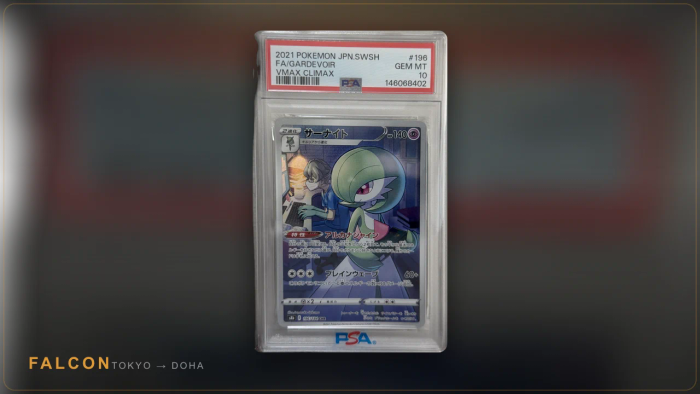
A convincing photo or a valid PSA number is only part of the evidence. Use this checklist to identify the exact Japanese card, compare the item offered and decide what to ask the seller before paying. A remote check cannot authenticate a card with certainty.
Start with the exact card, not just the Pokémon name
Write down the language, set code, card number and finish. Compare against the same printing: a Japanese card and an English card are not interchangeable references. Different editions, lighting and camera settings can make a colour comparison misleading.
Ask for the front and back, all corners, edges and an angled surface view. For a graded card, include the entire holder and a readable label. A cropped image or a concealed certification number leaves checks you still need to complete.
Check a PSA certification number in three steps
Open PSA’s official Cert Verification page yourself and enter the number from the holder. Match the year, set, card number, card name and grade to the item being offered. Compare any images available in the record with the seller’s photos.
PSA warns that a successful lookup does not eliminate risk: genuine numbers can be copied onto counterfeit holders. Check the physical card and holder too. If the record and the listing disagree, pause and request clarification before paying.
Use visual clues together
Look for inconsistent text, missing details or a finish that does not match that particular printing. Do not assume that every rare card must have texture. Wear and manufacturing variation also need to be distinguished from counterfeiting.
Pokémon Support describes unusually high light transmission as a warning sign and suggests getting an assessment from a specialist card shop. Treat a home light check as a clue, not a certificate of authenticity. Do not bend, tear, peel or open a slab to test it.
A message you can send before buying
Please send clear photos of the front, back, corners and surface of the exact card. For a graded card, please include the full holder and readable certification number. Can you confirm the language, set, card number, grade and whether this copy is already in your inventory?
For a sourced-to-order item, ask when the actual copy will be selected and when its photos and certification details will be shared. Agree on the process if the requested card cannot be sourced. Confirm the quoted currency, shipping charge or inclusion, and delivery estimate for your destination.
Choose a next step
If you are evaluating an existing card, use the official resources below or seek an in-person specialist assessment. FALCON’s sourcing inquiry is for buying a specified card; it is not a professional authentication service.
If you want to buy through FALCON, send the card’s set and number or its product-page link. Check the availability label: sourced to order means the card still needs to be procured, while in stock describes an available inventory item. FALCON is independent of Pokémon and PSA.
Frequently asked questions
Does a valid PSA number prove the slab is genuine?
No. It confirms that the number exists in PSA’s records. Match the record to the card and holder; PSA notes that real numbers can be copied.
Can a photo or light test prove a card is real?
No single remote or home check provides certainty. Gather several views and matching product information, and seek an expert assessment when doubt remains.
What if the certification number is hidden?
Ask for a readable number and images before relying on the grade claim. For sourced-to-order cards, confirm when details for the actual copy will be available.